In a country where traffic laws are merely suggestions and the horn is a form of punctuation, choosing your mode of transport is more about Go strategy than a simple trip from A to B.
Follow the guide!
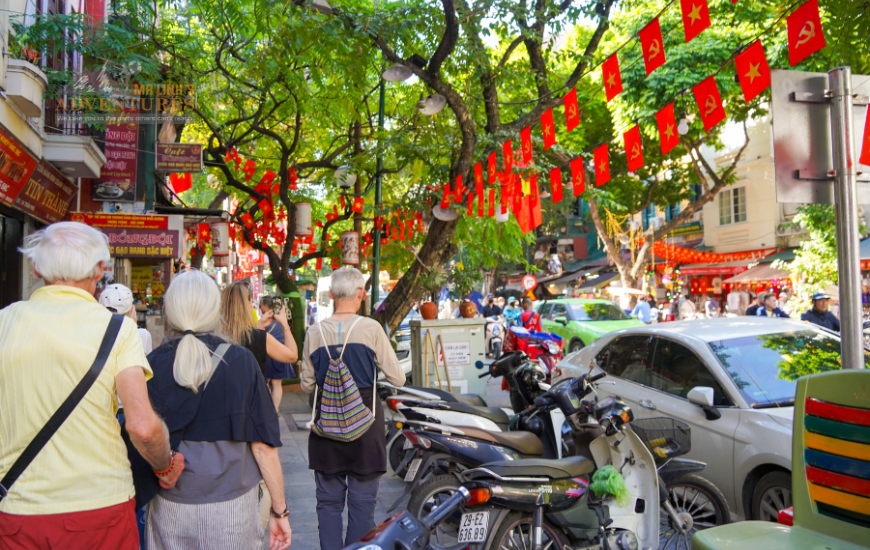 The crowded streets of Hanoi's old quarter | Mr Linh's Adventures
Welcome to Vietnam! Whether you land in Hanoi (the city of a thousand alleys) or Ho Chi Minh City (the metropolis that never sleeps), your biggest challenge won’t be finding a good Pho, but crossing the street and navigating this relentless flow of metal and noise without ending up as a stir-fry noodle topping.
The scooter (moto or xe ôm): Between tradition and app modernity
Urban Vietnam serves up numbers that will give you tropical sweats: 8 million scooters in the South, 5 million in the North - 77 million registered two-wheelers nationwide. That’s 770 bikes per 1,000 inhabitants, one of the highest rates on earth. In Vietnam, the scooter is to man what the baguette is to the French: indispensable. Representing over 90% of urban trips, it’s the fastest way to slalom through the traffic.
The Xe Ôm
Before we dive into the apps, I have to tell you about Vietnam’s ancestral moto-taxi: the Xe ôm (pronounced sé-ohm, like a prayer at 20 km/h).
The breakdown: "Xe" = vehicle; "ôm" = hug.
The service: A paid transport service where the passenger is invited to... embrace a total stranger. In theory, it's so you don't slide off; in practice, it's so you don't become roadside decor. It’s the prehistoric version of Uber, "hug & roll" style.
The deal: No app, no meter. The price is entirely negotiated, turning the tourist into a professional mime just to discuss the fare in Vietnamese.
"If the adrenaline of Hanoi traffic gives you a craving for wide-open spaces and wilder roads, know that the real Vietnam is often found where the asphalt ends. To swap horns for mountain silence, check out our off-the-beaten-path expeditions."
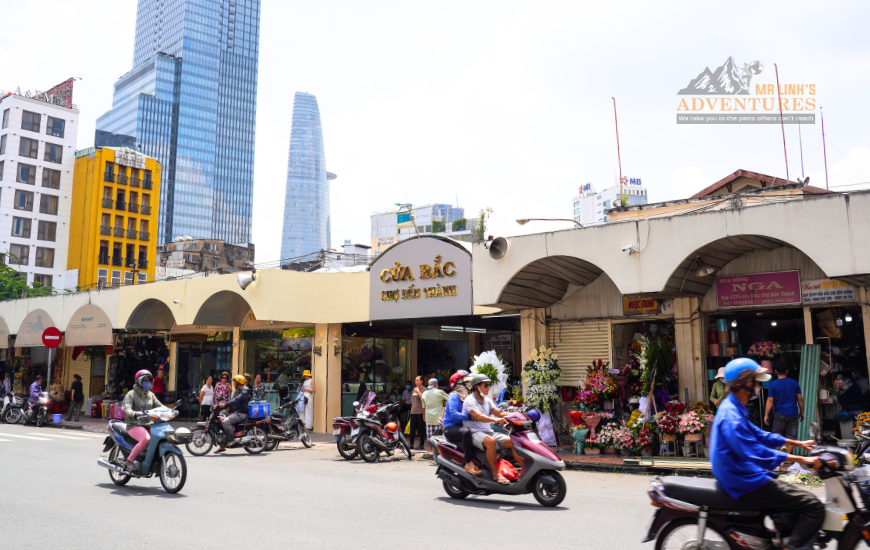
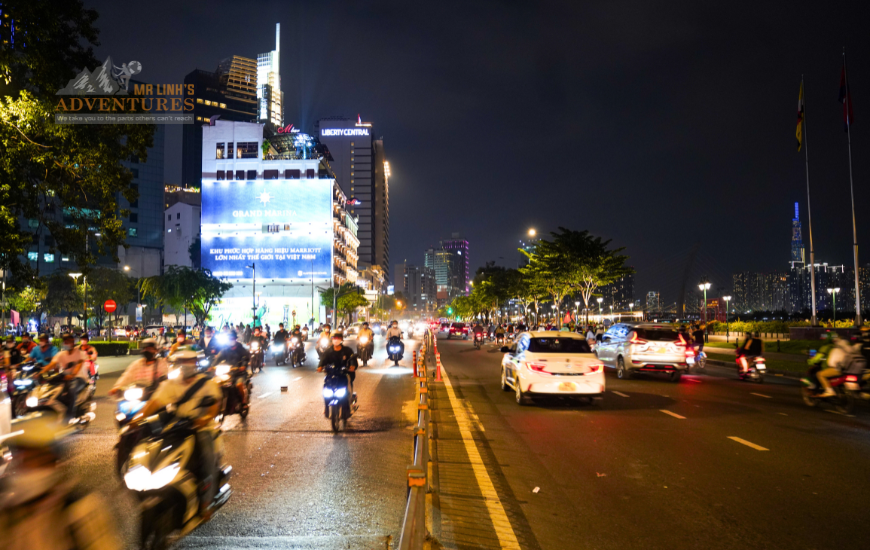 The bubbling traffic of HCM city | Mr Linh's Adventures
Uber-like apps
The concept is simple: an app, a driver in a colored vest (white and green respectively), a helmet (occasionally vintage), and you're off.
Why we love it: It’s ultra-fast, weaves through everything, and costs about the price of a coffee.
The bonus: It’s the best way to test your faith when your driver decides to take the sidewalk to save three seconds. Local immersion guaranteed!
The lineup
Grab: The tourist’s choice. No local SIM needed (a roaming number for SMS is enough) and the in-app chat translates Vietnamese to English.
XanhSM: The eco-warriors in electric blue. Careful: the app strictly requires a Vietnamese phone number for the OTP.
Be & Gojek: More for locals or expats who know how to say "trời ơi" at the right moment. Be is 100% Vietnamese; Gojek is too, unless you win the lottery and find an English-speaking driver. The in-app chat doesn't translate like Grab. They push their local wallets (BeWallet, GoPay), and foreign cards are often rejected or subject to mystery exchange rates. And then…The vibe: while the average tourist is praying for their life, the local driver is busy watching TikTok.
Renting or "GrabBike"?
Only rent if you have an international permit (or a converted Vietnamese one), nerves of steel, and an extraordinary physical aptitude for driving in chaos. Check if the insurance card is provided and never forget the golden rule: Never stop. The flow will go around you like water around a rock. And look before you brake - never after.
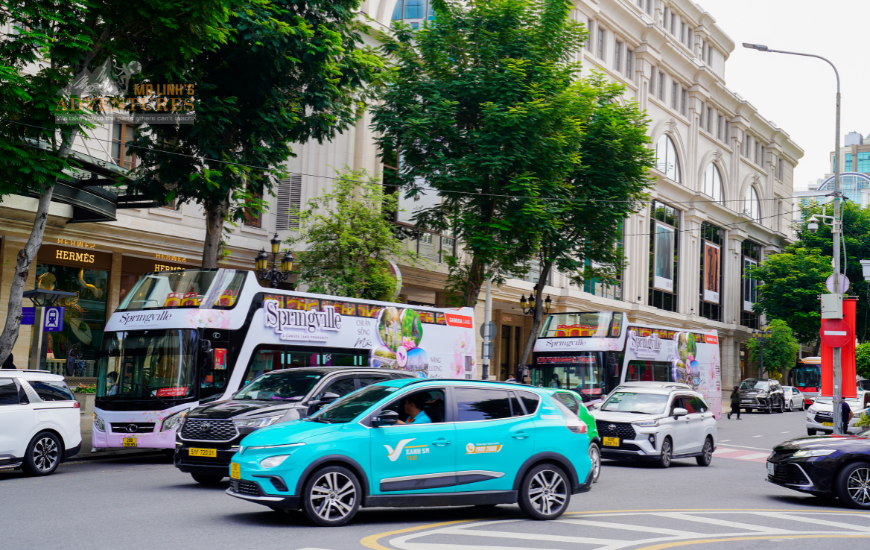 XanhSM, the electric blue cars taxis | Mr Linh's Adventures
Taxis and VTCs: Comfort, A/C, and traps to avoid
The air-conditioned lounge... provided the meter doesn't turn it into a sauna. Perfect for rainy days or keeping your hair intact.
Mai Linh and Vinasun: The two reliable companies, recognizable in green and white. These institutions stand out because their meters aren't "suddenly broken" (which usually means 3x the price) and they don't try to take you on a city tour to reach the hotel next door. Pro tip: Always check that the meter is on; if not, bail with a polite but firm smile.
Grab Car: You get the app advantage: fixed price known in advance and no language barrier. And a nice price.
The downside: The 5:00 PM rush hour. You’ll have time to read the complete works of Proust before arriving, and the price will be steep as rates climb with the traffic jams.
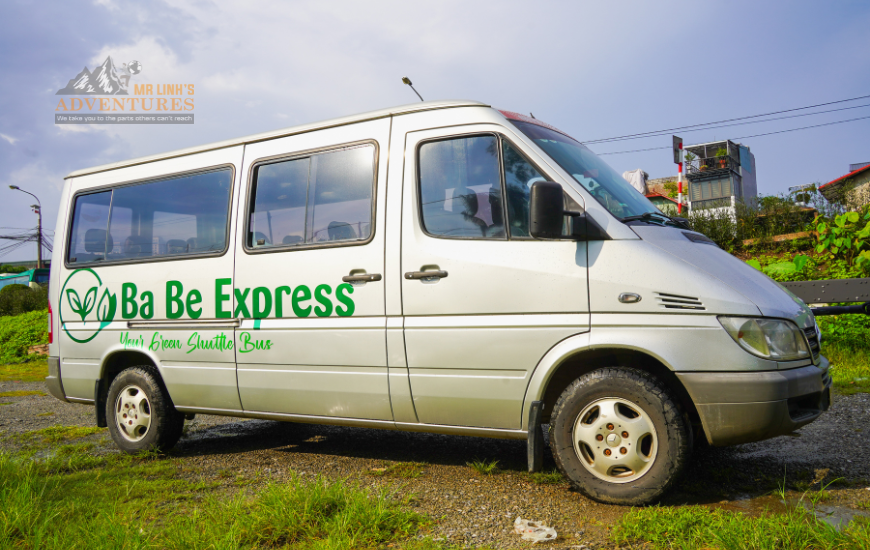 Ba Be Express, your greenline from Hanoi to Ba Be National Park | Mr Linh's Adventures
Bus and metro: Budget-friendly, eco-conscious options
Taking the bus is choosing "I have time, but no budget" mode. It’s been called the "poor relation" of transport, yet it’s cheaper than a coffee, longer than a day without banh mi, and more authentic than a cyclo tour.
The experience: With A/C at 19°C in summer and 28°C in winter, it’s a thermal UFO.
The warning: If you're standing, hang on tight : Vietnamese brakes are urban traction tests. If only the back seats are left, expect a heat + oil smell combo; those seats are for the initiated or napping students.
Top tip: Use the BusMap app religiously unless you want to end up 40km from your hotel, as the routes seem to have been designed at Hogwarts.
The metro
Saigon: Finally opened the ball with Line 1 in January 2025. It connects District 1 to Thủ Đức in 30 mins (vs 70 mins by scooter) for a pittance.
Hanoi: Took 20 years to get out of the garage. Inaugurated in 2021, Line 2A cost more than a Chinese space opera and is already considered a "souvenir line". You ride it once for the photo, put the ticket in your "proof I've seen the future" drawer, and go back to your scooter.
The metro is far from being a daily habit for the urban traveler yet.
"The metro is fine for crossing District 1, but to cross the authentic landscapes of Northern Vietnam without hit the 'mass tourism' button, nothing beats local experts. Discover how to explore Ba Be National Park with those who know every trail."
 Escape to Ba Be, just few hours drive from Hanoi | Mr Linh's Adventures
So, scooter, taxi, or bus?
- Choose the scooter if your adrenaline levels exceed your life insurance policy.
- Choose the taxi if you prefer A/C over cardio.
- Choose the bus if you have time and the soul of a wanderer.
- Choose the metro if you're afraid of death.
Whether you pick the A/C of a taxi, the adrenaline of a GrabBike, or the folklore of a local bus: in Vietnam, the journey matters as much as the destination. Enjoy the urban jungle!
"Survived the urban jungle? Bravo! Now it's time to discover the real one.
For a smooth transition between city madness and the magic of terraced rice fields, trust the expertise of Mr Linh’s Adventures."
 Vietnam, the country with millions of scooters | Mr Linh's Adventures
Transport in Vietnam: Frequently Asked Questions (2025-2026)
Is Grab available everywhere in Vietnam? Yes, Grab is widely available in major hubs like Hanoi, Ho Chi Minh City, and Da Nang. It is the most popular choice for travelers because it offers fixed pricing and an in-app chat that translates Vietnamese to English in real-time.
How do I use the new Saigon Metro? The Line 1 (Bến Thành – Suối Tiên) is now operational as of January 2025. It consists of 14 stations and runs every 2 to 3 minutes. It’s a game-changer for traveling from District 1 to Thủ Đức, cutting travel time from 70 minutes down to just 30.
Which taxi companies are the most reliable? For traditional metered taxis, Mai Linh (green) and Vinasun (white) are the most trusted institutions. They are known for having functioning meters and professional drivers, avoiding the "broken meter" scams sometimes found elsewhere.
Can I legally rent a scooter in Vietnam? You can, provided you have an International Driving Permit or a local Vietnamese license. Keep in mind that urban traffic is chaotic—always look before you brake and never come to a full stop in the middle of the flow, as the traffic is designed to "flow" around you like water.
What is the cheapest way to get around the city? The local bus remains the most budget-friendly option, often costing less than a cup of coffee. For the best experience, use the BusMap app to navigate the complex routes and look for the new electric bus lines in Hanoi and HCMC for a more eco-friendly trip.