Introduction
Choosing between Sa Pa and Pu Luong first requires you to accept the idea of paying to see traditional costumes worn like work uniforms. Both Pu Luong and Sa Pa offer spectacular rice terraces, but in one, you can enjoy forty-seven varieties of pizza along with a Starbucks. The other serves only sticky rice soaked in corn alcohol, while a family watches you eat, wondering how you’ll finish your bowl holding chopsticks that way.
Dive into two worlds that stand in stark contrast.
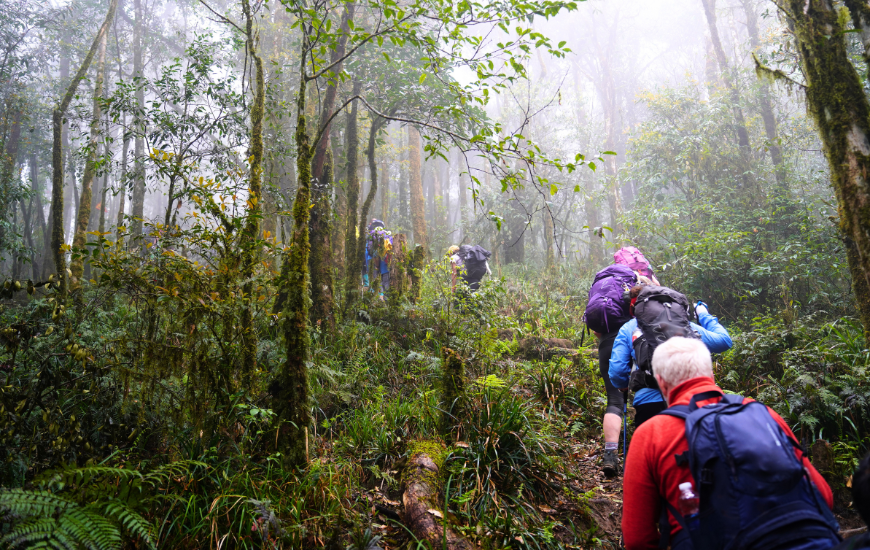 The dream of many hikers: conquering the Fansipan | Mr Linh's Adventures
Sa Pa: the big gap
Sa Pa is located 320 kilometers from Hanoi, meaning a five-hour bus ride or an overnight train to Lào Cai followed by an hour of car ascent. Upon arrival, you’re hit by two shocks: the steep rice terraces plunging into the valley and the vertical hotel buildings sprouting like mushrooms after monsoon rains. The evidence is clear; tourism is not a secondary activity here: it’s the main industry.
Hmong and Dao women aren’t wearing their indigo embroidery out of cultural pride, but economic necessity. They wait for you at the bus exit with the same patience as airport taxi drivers. Their job is to be photographed (dozens of staged shots each day) before selling bracelets or fabrics. Some will follow you on the trails for hours, repeating "Hello, you buy from me" like a mantra, turning your hike into a constant negotiation. This isn’t harassment; it’s how they make a living.
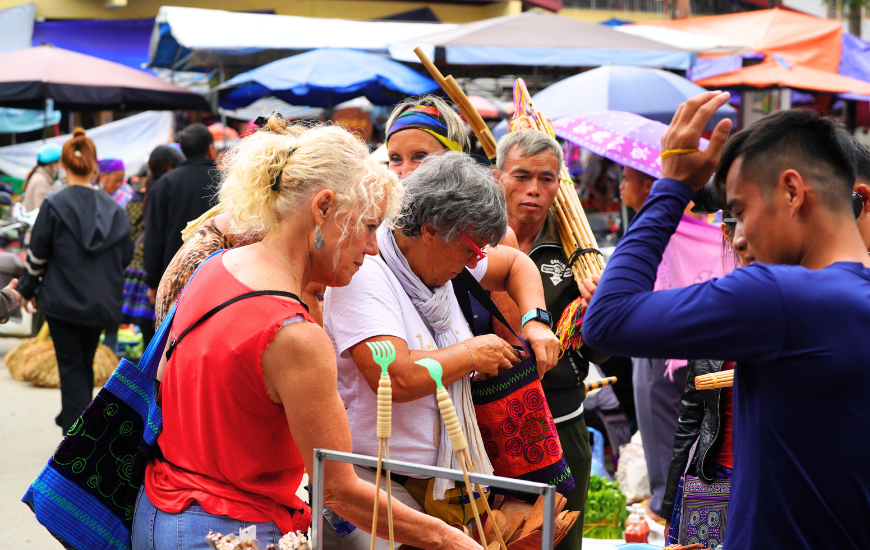 Sapa has become a tourist magnet | Mr Linh's Adventures
Downtown feels like a snowless ski resort devoid of charm: same franchises, same concrete, same bistros serving margherita pizzas for 8 dollar. The five-star hotels (like “De La Coupole,” part of the Accor group) are run by investors from Hanoi or Europe. They employ Hmong people at the Vietnamese minimum wage (around 200 euros per month) to clean toilets they wouldn’t clean themselves. Meanwhile, shops are rarely run by locals but by Kinh merchants (the majority ethnicity) who markup crafts by 300% and toss crumbs back to the producers.
Expert Tip: Sa Pa remains an icon, but it demands a trained eye to avoid falling into the "mass tourism" trap. At Mr. Linh’s Adventure, we dodge the concrete by crafting exclusive trekking routes away from the beaten path, allowing you to admire Fansipan without the crowds.
Have a look to : Sapa Remote Trekking 3 days 2 nights
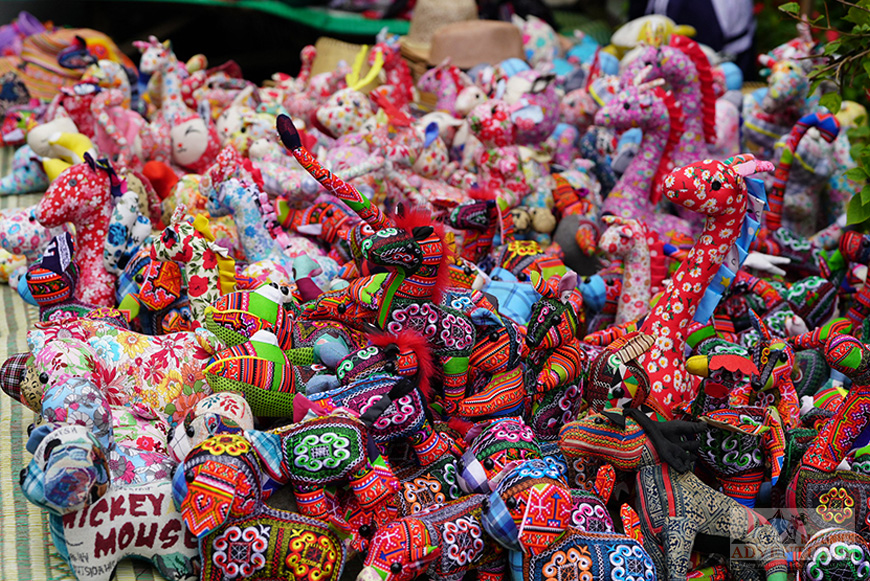 Sa Pa, where the authentic lives side by side the fake "made in China" souvenirs | Mr Linh's Adventures
Yet, Sa Pa offers what Pu Luong can never match: density. Markets where livestock still changes hands alongside village gossip (Bac Ha on Sundays, Coc Ly on Tuesdays). Stunning views of Fansipan, the 3,147-meter peak you can ascend via cable car for 30 dollars one way. And real freshness (10 to 25 degrees Celsius) that makes you forget the muggy heat of the plains. If you come in December, you might even see snow. In August, you’ll mostly encounter 4,000 other tourists on the same trail, tossing water bottles over stone walls because the trash can is ten meters away.
I won’t lie: in Sa Pa, “authenticity” has become a commodity. This doesn't mean you should avoid the site, but it requires you to stay alert as a discerning consumer. If you stay in a certified community homestay in Ta Van or Lao Chai, check reviews to ensure the owners are genuinely Hmong or Tay, not city intermediaries. You can still see flooded rice fields in May (the mirror effect) or golden ones in September, without sharing the moment with three tour buses... But you’ll need to hike further and accept that comfort is relative.
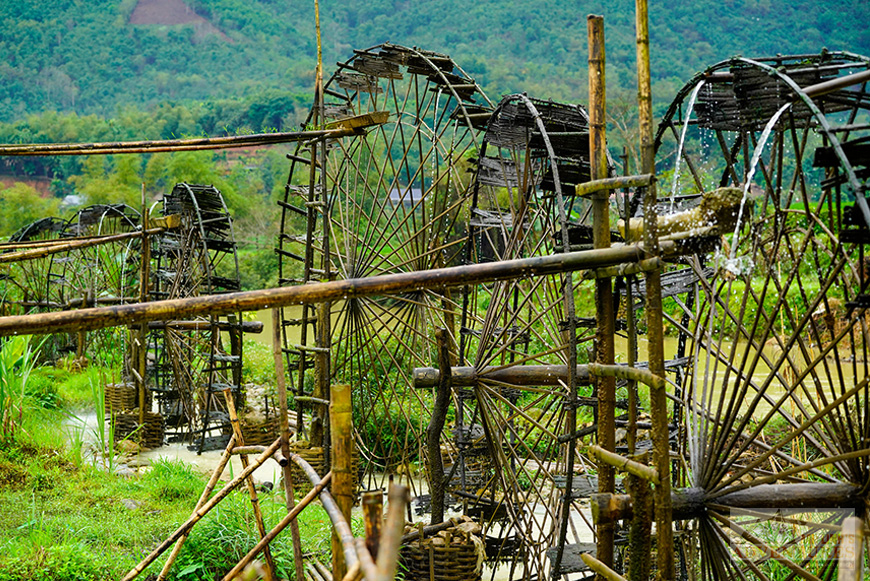 Iconic water wheels of Pu Luong Nature Reserve | Mr Linh's Adventures
Pu Luong: a promise fulfilled... For how long?
Located 180 kilometers southwest of Hanoi, about three to four hours by direct road, Pu Luong is what Sa Pa advertises in its brochures but hasn’t provided since 2010. Here, there’s no downtown, no pedestrian streets, and no vendors pulling at your sleeve. Just a classified nature reserve where regulations still prohibit concrete buildings, encouraging inhabitants (Thai and Muong) to maintain their stilt houses made of bamboo and wood.
The fundamental difference? In Pu Luong, ethnic minorities don’t wear traditional costumes daily. They dress in jeans and t-shirts, just like you and me. Folklore isn't on their backs; it's in their actions: plowing with buffaloes, repairing bamboo water wheels, sharing meals. If you're looking for postcard-perfect Instagram shots with red turbans and silver jewelry, you’ll be disappointed. If you want to understand how life unfolds in a valley where electricity sometimes cuts off at 9 PM, you’re in luck.
Need to unplug? If Pu Luong intrigues you but logistical organization puts you off, we’ve crafted small-group stays that prioritize the most authentic homestays in the reserve. It’s total immersion with less transport stress.
►
Mai Chau - Pu Luong Trekking 3 days 2 nights
.png "Hiking in Pu Luong") Pu Luong : a paradise for nature-lovers | Mr Linh's Adventures
Pu Luong : a paradise for nature-lovers | Mr Linh's Adventures
The economic benefit is stark and simple: the 12 dollars for your night in a homestay often goes straight into the tin piggy bank that the grandmother who cooked for you hides under her bed. No intermediaries, no booking platform taking a 15% commission, no manager from Hanoi. You eat what the family eats, sleep where they sleep (with bamboo walls that offer little soundproofing, roosters crowing at 5 AM, and sometimes outside bathrooms), and if you stay less than two nights, you’re a parasite : consuming water, electricity, and time for a ridiculously low economic return.
Pu Luong has two harvest seasons (May-June and September-October), compared to only one in Sa Pa. This means the rice fields are either emerald green or solid gold, but never really ugly. The trails are flat, accessible for children and weary knees, winding through bamboo forests and water wheels you can admire without paying an entry fee. There’s no need for a guide on basic routes: just rent a bike from the homestay and get lost ; that’s all you need.
But the “miracle” is already fraying. Some homestays are starting to insulate their bamboo walls with polystyrene to satisfy tourists who want “authenticity but with air conditioning.” Other villages near the main road are developing monoculture economies, abandoning challenging rice cultivation to turn into dormitories for tourists. If you come back in three years, you may find the same concrete as in Sa Pa, but with less charm and fewer services. And possibly even a cable car climbing to the top of Pu Luong. Yes, the project exists in a preliminary proposal. Yes, this miracle has an expiration date. If this project moves forward, Pu Luong will quickly resemble Sa Pa: a summit access in 15 minutes, 5,000 visitors per day, and rice fields transformed into a backdrop for cabins.
For now, it’s just on paper. But if you want to see Pu Luong before the glass and steel take over, don’t wait.
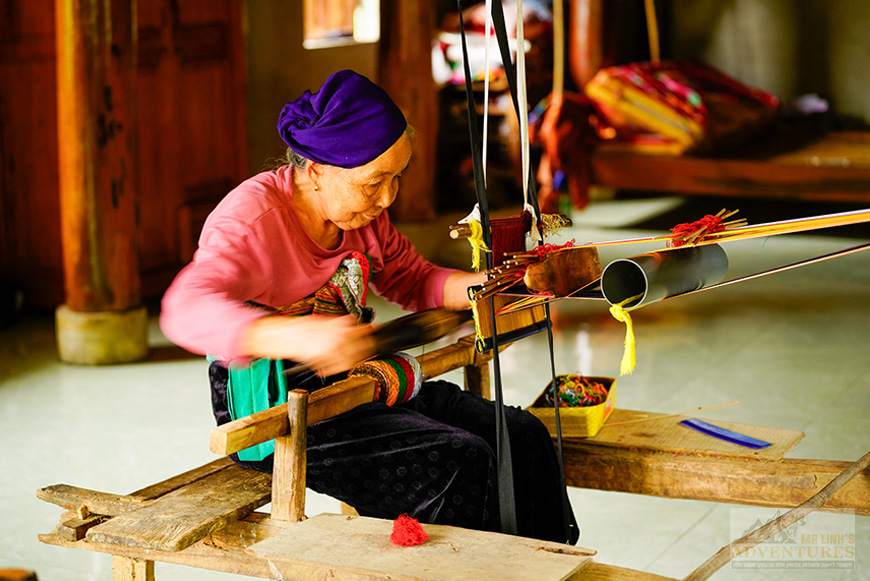 Preserved traditional craft in Pu Luong | Mr Linh's Adventures
Ethics isn't optional: it's accounting
In both destinations, your camera is a weapon. In Sa Pa, photographing a Hmong woman without buying a 2-euro bracelet first is theft. It’s theft of time, dignity, and image. Many own smartphones: offer to send the photo via WhatsApp; that's the only acceptable currency if you don’t want to pay.
In Pu Luong, the locals are less used to cameras. Start with an exchange (with a smile, perhaps your best basic Vietnamese) and show your camera, waiting for non-verbal consent. Never photograph elderly people without explicit permission: in Thai animist beliefs, this is considered soul theft, and it's no metaphor.
If you choose Sa Pa, hire local guides through cooperatives like Sapa O’Chau (70 to 80% of the payment stays in the community) instead of Hanoi-based agencies. Buy textiles on the trails directly from producers, knowing that an embroidered fabric represents three weeks of kneeling work. Negotiate with respect, or don’t negotiate at all.
If you choose Pu Luong, vary your spending: dinner at one place, a bike rental from another, a guide from a third. Bring your water bottle; plastic bottled water is the only visible waste in this valley, as there’s no recycling system. Respect clothing codes as well: the Thai are Theravada Buddhists, so shoulders and knees must remain covered in the villages. Remove your shoes before entering a stilt house, not just out of tourist politeness, but because it’s their home, not yours.
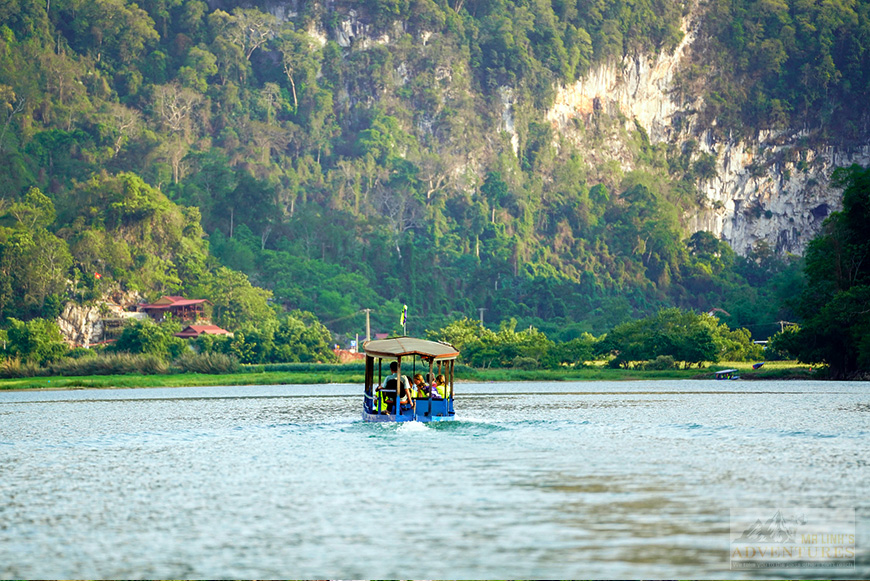 Peaceful Ba Be Lake, Ba Be National Park | Mr Linh's Adventures
Or there's Ba Bể
There’s
a third option, too. If neither the commercial spectacle of Sa Pa nor the too-peaceful calm of Pu Luong convinces you; if you want mountains, some rice terraces, a freshwater lake, caves navigated by boat, and a statistical guarantee of not encountering another tourist for three days, then head towards
Ba Bể.
But that’s another story. And perhaps the only place where you won’t find forty-seven varieties of pizza. Just grilled fish by the water. And silence.
Ba Bể, our signature destination: If neither Sa Pa nor Pu Luong meets your thirst for the absolute, Ba Bể Lake awaits you. It is here, in our historic stronghold, that we take you to sleep in a
Jungle Resort by the water, explore caves by boat, and savor the silence of a jungle where tourism isn’t yet an industry, but a meeting.
►
Ba Be Nature Escape 3 Days 2 Nights