There’s an unconfirmed theory that the average density of a travel suitcase is inversely proportional to its actual usefulness. The more “just in case” layers you cram in, the exponentially higher the odds you’ll end up wearing a single t-shirt for three days.
Another theory, just as compelling, suggests that North Vietnam possesses a unique magnetic field: one that dissolves travelers’ meticulous plans into a warm mist, while transforming their carefully folded belongings into an organic mass whose properties now fall within the realm of experimental geology.
If you’re here, it’s probably because a well-meaning friend told you: “Pack everything, you never know.”
That friend is wrong. Logically, morally, and probably fiscally too (though that’s none of our business).
So here’s what you absolutely must not bring. For your own good. And for the good of local atmospheric equilibrium.
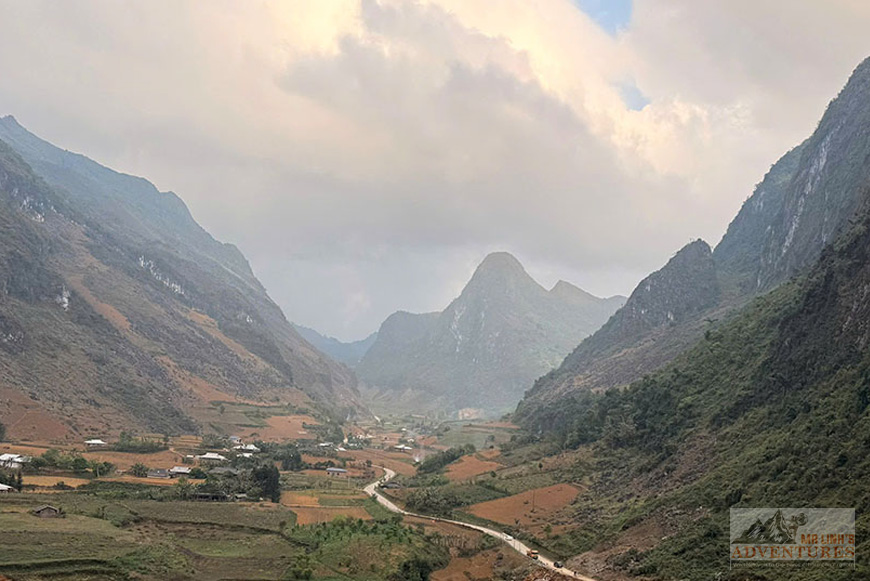 The only thing you rarely regret when travelling is having packed too little | Mr Linh's Adventures
Survival checklist for those who can’t be bothered to read the whole thing
- Bring: Thin layers, well-worn shoes, poncho, power bank, solid soap
- Leave behind: Heavy jeans, pristine white sneakers, 2L thermos flask, “universal” adapter, alpine hiker ego
- Golden rule: If you’re hesitating, leave it. Northern Vietnam will lend you what you need (and judge you with benevolence if you didn’t).
The clothes that believe in climate change
The “j
ust in case it’s cold in the mountains” jeans.
Dear jeans. Dear noble denim. You’re about to face the jungles of
Ba Bể, the
passes of Hà Giang, and 8°C nights in an unheated wooden room. You will sweat, dry, sweat again, and end up weighing three kilos heavier thanks to the ambient humidity[
1].
In
Northern Vietnam, the climate doesn’t choose between hot and cold. It chooses both, at the same time, not necessarily in the same place, and with an irony only a meteorologist under banned substances could conceive.
Pack thin layers that dry quickly and accept philosophically that they’ll never regain their original shape. Heavy cotton isn’t clothing here. It’s a sponge for regrets.
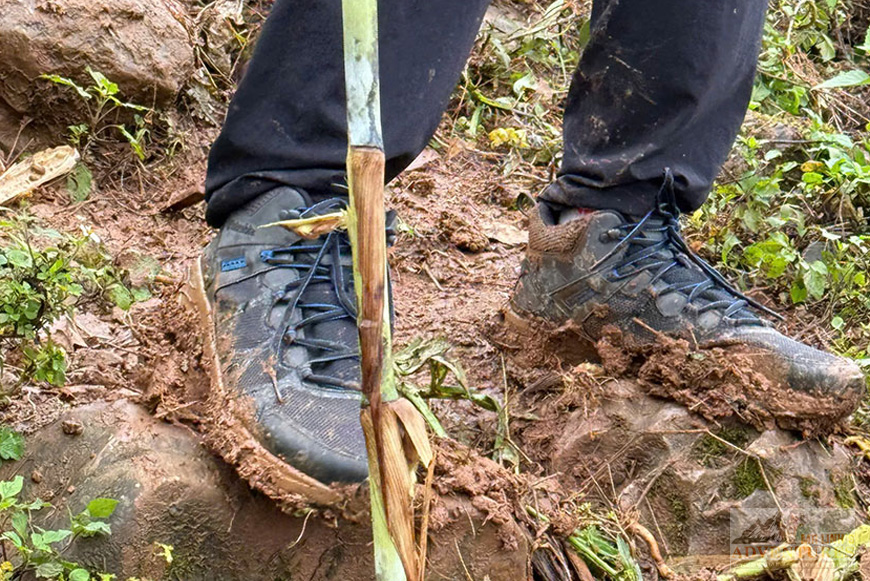 These shoes have made peace with the mud . They gain character, not cleanliness | Mr Linh's Adventures
The shoes with ambitions
Pristine white sneakers. You bought them to “look clean in photos”.
They’ll end up brown, then ochre, then a metaphysical grey that will question the meaning of travel.
The soil of Northern Vietnam doesn’t respect urban chromatic codes. It has its own standards, and they include mud, laterite dust, and occasionally, if you’re lucky, a bit of water buffalo dung[2].
Trail shoes are practical, you think. Yes, until your ankle decides to become a circus performer. They grip well, but they’re about as useful as an umbrella in a gale when it comes to ankle support. On the slippery karst of Hà Giang or the rocky paths of Sapa, an ankle that calls it quits due to lack of support means the trek is over (and the beginning of a long conversation with the two-stroke engine of a locally-tempered motorbike, or a very patient guide).
As for heels or city shoes: Vietnam’s karst topography isn’t a capital city tarmac. It’s a geological puzzle assembled by a giant who clearly abused caffeine and legal hallucinogens. Choose closed, non-slip shoes that have already lived. New shoes, like new tourists, still have a lot to learn about humility.
The pre-apocalypse toiletries
Five different shampoos. A professional conditioner. A jade-microbead exfoliating shower gel. A deodorant in stick, spray, stone, and travel size.
You’re not preparing for a Mars expedition. You’re in a region where hot water is a negotiable luxury, and where the shower, when it exists, often follows Buddhist philosophy: you don’t control it, you accept it. Your hair, however vain, will discover that 90% humidity has a very firm opinion on volume. It will do what it wants.
Bring a solid shampoo, a bar of soap, and a quick-dry microfibre towel. The rest is cosmetic marketing.
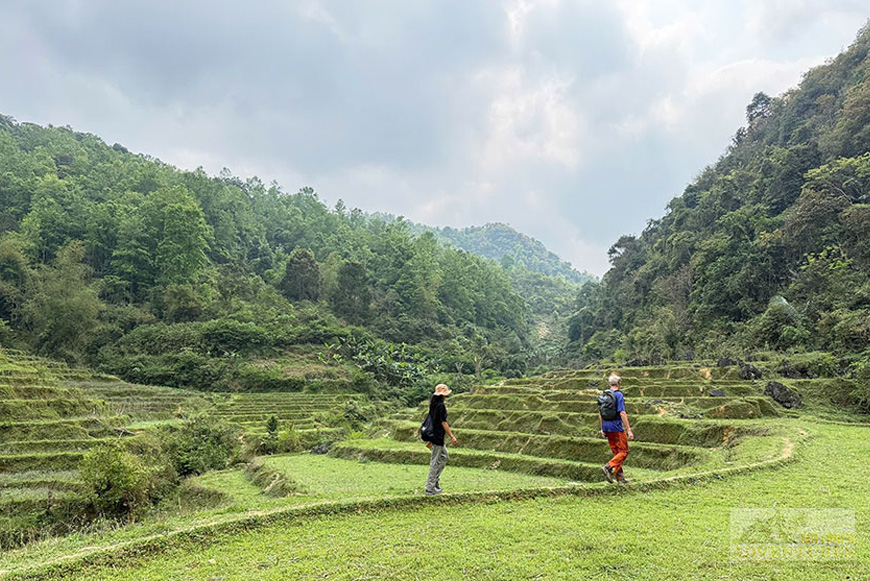 If you must carry anything of value, let it be an inquisitive mind. | Mr Linh's Adventures
The gadgets that ignore reality
The “does-everything” universal adapter
It won’t do anything except take up space and remind you, at every Vietnamese wall socket, that the universe wasn’t designed for your comfort. Type C is king here. Everything else is commercial diplomacy.
The e-reader
The Kindle, noble companion of optimistic travellers, promises entire libraries in an innocent rectangle. Until Northern Vietnam’s humidity decides to turn it into an electronic paperweight. Out here, you’ll spend your time haggling with a Hmong guide, fighting for a bearable position on a bus that defies gravity, or staring at a rice paddy at sunrise; not diving into a novel. Result: 200g of silent judgment in your bag, and a device that just sits there wondering why you dragged it out here.
Your inseparable laptop
On the Hà Giang loop, it serves one precise function: a disaster magnet. Our guides have recorded more cracked screens than sprained ankles. Unless you’re a special correspondent for a media outlet demanding deadlines, black coffee, and imaginary Wi-Fi, leave the tweet machine in Hanoi. Your smartphone will do the job. And more importantly, you’ll actually look at the landscape instead of pixelating it to post three hours later. Northern Vietnam isn’t meant to be framed. It’s meant to be lived.
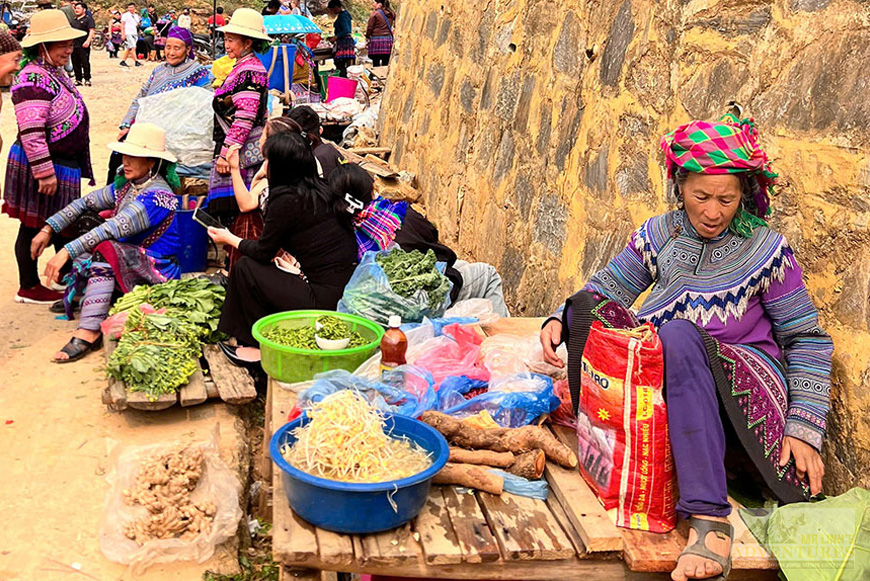 Reconnect with people; conversations don’t run out of battery | Mr Linh's Adventures
The portable solar charger
The favourite of optimists and plastic dream manufacturers. On paper, it promises infinite autonomy. In reality, it crashes into three implacable Vietnamese realities: the canopy filtering sunlight like a theatre curtain, the fog that has clearly signed a lifetime annuity, and homestays that almost always have a working wall socket. This leaves your solar panel ample time to ruminate on its uselessness under a grey sky. Go for a classic power bank instead. Less poetic, ten times more reliable, and it won’t give you the silent treatment when it pours rain.
The 30,000 mAh power bank
It promises eternal battery life. Until a security agent patiently explains that eternity has Wh limits. Airlines love round numbers and firm rules: above roughly 27,000 mAh (100 Wh), your energy brick becomes an item worthy of confiscation. Probably with ceremony and a small stamp. Bring 10,000–20,000 mAh in your hand luggage instead: enough to survive mass selfies, cabin-approved, and far less likely to end its days on an airport shelf as a trophy of security checks.
The sleeping bag that thinks you’re going to the North Pole
The ultra-luxe sleeping bag promises polar sleep in a sack that smells of down and superiority. Except you’re not parking your bags at 4,000 meters: you’ll sleep in a wooden homestay where they’ll lend you a blanket and the stove sings lullabies; the night might drop to 12°C - scary, sure - but not enough to justify a penguin suit. What you need is a silk or light cotton liner; for hygiene, not warmth. It weighs 100g, takes up sock space, and won’t judge you when you realize you’re sweating more inside it than in the jungle.
The drone
That mechanical bird promising epic panoramas and free diplomatic headaches. In Vietnam, drones are prohibited in military zones, airports, and sensitive sites. Northern Vietnam is a border region (with China), militarised, and dotted with UNESCO sites. Here, even a hobby drone can end up confiscated at customs or provoke a frosty stare from an official who only knows two words of English: “no” and “know”. Verdict: leave it at home. Your phone films just fine, and more importantly, won’t turn you into the unwilling protagonist of an administrative soap opera.
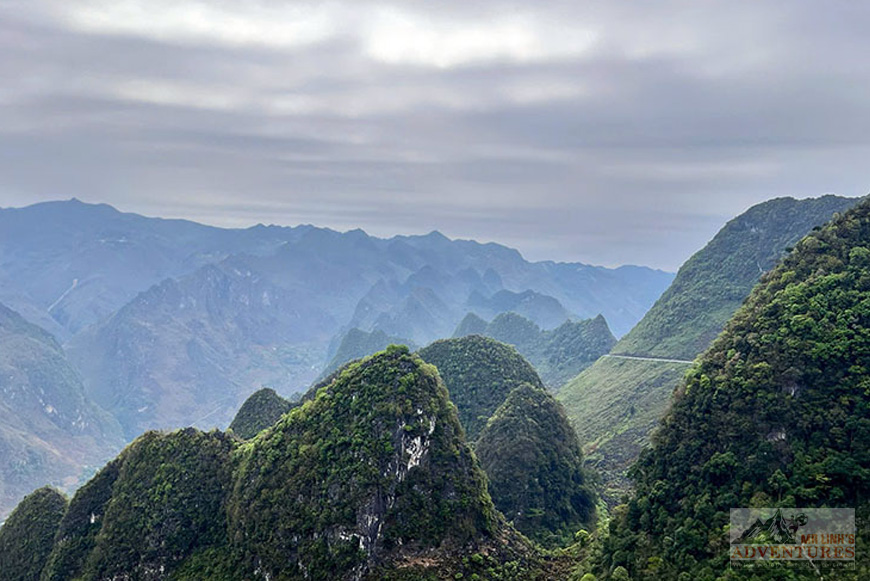 Forget your smartwatch: it can count your steps, but not your stories | Mr Linh's Adventures
The “just in case” pile
The collapsible umbrella
It will rain, yes. But sideways. With wind. Your umbrella will turn into an improvised sail, or an involuntary blunt weapon against a bamboo bush. Prefer a light poncho. It’s ugly. It’s effective. It accepts its role. You might even emerge from it smelling faintly of French cheese that didn’t travel VIP class.
The 800-page paper guidebook
You’ll open it three times. Once at the airport, once to check if “Ha Giang” is spelled correctly with an “G” at the end, and one last time to use it as a pillow on a minibus. Your local guide, meanwhile, knows the shortcuts, the stories, and where to eat local food without getting ripped off. Trust them. They’ve already read the guidebook. They probably even corrected it[3].
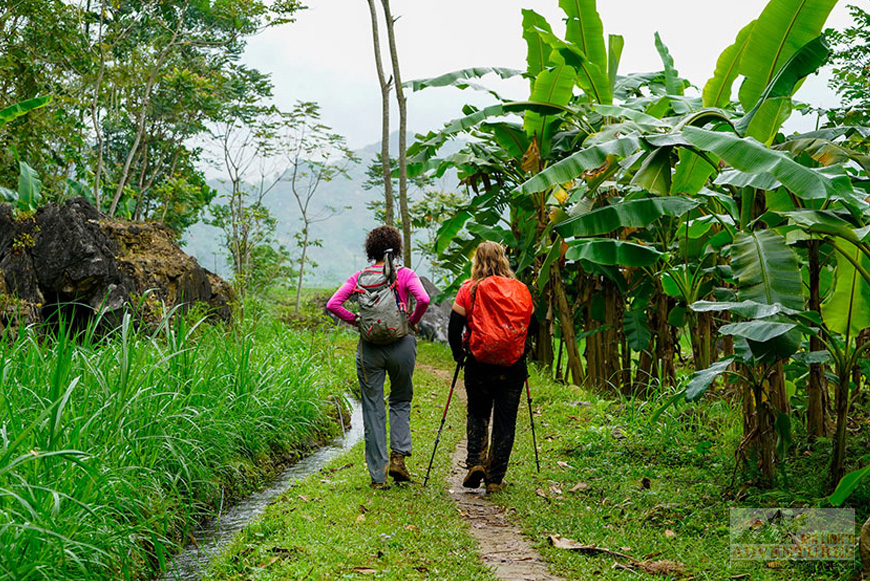 Choose a soft travel bag : fabrics forgive bumps | Mr Linh's Adventures
By the way, which suitcase NOT to bring?
The hard-shell wheeled suitcase is the cargo hold’s space pod: elegant on an airport red carpet, catastrophic on a mountain track.
In Northern Vietnam, there are no uniformed porters to carry your luggage like trophies; your belongings will end up strapped to the back of a small motorbike that considers mud a standard accessory.
A hard-shell suitcase? As useful as a leaky umbrella: impossible to strap, impossible to cajole. Opt for a soft travel bag and a waterproof cover instead. It folds, it squeezes, it accepts its fate with a dignity that will inspire you.
Because even lists have to end somewhere
The
ideal suitcase for Northern Vietnam is the one you don’t have. Unfortunately, airlines have very firm opinions on this kind of philosophy, usually expressed in per-kilogram fees that defy human understanding (or at least your banker’s).
So travel light. Pack smart. Pack with the humility of someone who knows that in three days, everything they carefully organised will have become a damp pile of fabric at the bottom of a bag, and that, strangely, it will suit them perfectly well.
Northern Vietnam isn’t visited with lists. It’s lived with spontaneity, local smiles, and a surprising capacity to accept that “Plan A” was actually “Plan B disguised as optimism”.
And if you’re still doubting…
contact us. We’ve got backpacks. We’ve got guides. Above all, we’re used to making sure your luggage weighs no more than your regrets[
4].
[
1]: It is scientifically proven that humidity in Northern Vietnam increases by 15% every time a traveller says the phrase “just in case”. (Source: *Diary of Travel Regret*, vol. 42, unpublished, but felt by everyone.)
[
2]: White sneakers have an average survival rate of 4.3 days in rural Vietnam. After that, they develop their own consciousness and start asking questions about the meaning of travel.
[
3]: If your guide says “don’t worry about it”, translate immediately as: “I’ve already sorted it, and it’s cheaper than your version anyway.”
[
4]: This promise does not cover heels in a 4x4. For that, you need special insurance. And even we won’t underwrite it.
Going further: