Why Northern Vietnam in 2026?
Northern Vietnam did not wait for authenticity-seeking cyclists to arrive with their panniers and sense of the tragic to become remarkable. It already was, back when roads were tracks, when GPS units lost themselves philosophically in karstic fog, and when "gravel" was a word used to describe a state of mind rather than a tyre profile.
If you are still consulting a printed guide from before 2023, shelve it gently between your old compass that never knew where it was going and the IGN map you always folded the wrong way.
In 2026, something shifted. Not the landscape, the access.
- Roads have stabilised (Ha Giang, Cao Bang now asphalted)
- The rental scene has matured (gravel bikes available, structured 4x4 support)
- Community waymarking is organising itself
This guide is your foundation. It does not replace experience, but it saves you from starting with the classic mistakes.
1. Planning: Climate, visas, budget & rhythm
Northern Vietnam does not make weather, it composes it. A four-part score, often played simultaneously depending on altitude and exposure.
October–November and March–April remain the ideal times to visit (18–26°C, clear skies, manageable humidity). December–February brings cold weather at higher elevations (temperatures as low as 0–5°C above 1,000 m); May–September sees the monsoon season, with heavy but brief downpours.
Visas & Insurance.
90-day e-visa, printed in duplicate. Verify that your policy explicitly covers off-road cycling, mountain biking, and 4x4/helicopter evacuation. Most "classic travel" policies silently exclude adventure sports. This is not pessimism, it is adult logistics.
Realistic budget for 2026 (per day, excluding international flights):
- - Self-guided (backpacks, GPS, homestays): $40–70
- - Semi-guided (route provided, accommodations booked, occasional assistance): $80–$140
- - Fully guided (guide, mechanic, 4x4 vehicle): $150–$250
Golden rule of rhythm
40-60 km/day, 400-800m elevation gain max for confirmed riders. The classic temptation, "10 days, 600 km, 5 cols, let's chain them", leads to tendinitis, the thousand-yard stare over a bowl of phở, and an early return in an air-conditioned minibus.
Northern Vietnam is pedalled by breathing. Schedule one free day every three: to repair, explore the market, do laundry, or simply watch clouds drift across the karst.
Cycle touring is not a race. It is a science of slow observation.
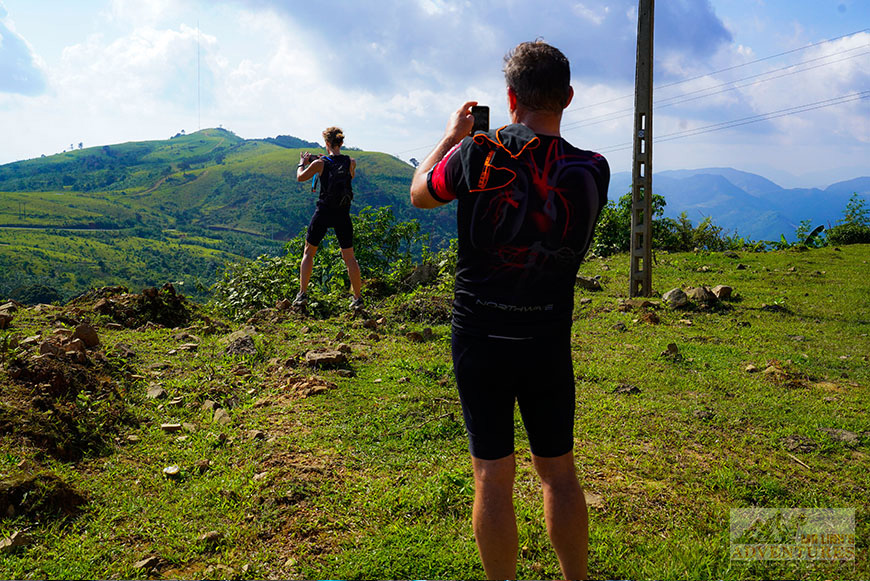 Choose your bike based on the terrain, not your ego | Mr Linh's Adventures
2. Geography of Effort: 5 Terrains, 5 Contracts
Northern Vietnam is not a cycle path. It is vertical, mineral, possessed of a beauty that renders every photograph perfectly disappointing. Choose according to your relationship with effort. Accept from the outset that your plan will be negotiated on the ground.
Ha Giang Loop
The ethnic immersion, cycle-friendly version
The
Ma Pi Leng Pass is not climbed, it is earned. The motorised loop is a classic; the cycling version demands respect, a low gear ratio, and acceptance that Vietnamese trucks obey their own particle physics.
In 2026, side tracks have been stabilised; technical alternatives to avoid the main axis at peak hours.
Info: 300-350 km | 6,000-7,500m elevation gain. Level: Confirmed–Adventurer
Alert: Morning fog <15m. Horns are sonar, not insults. Brake early.
.jpg "Cycling amidst rice fields") The living soul of Northern Viertnam | Mr Linh's Adventures
The living soul of Northern Viertnam | Mr Linh's AdventuresMu Cang Chai ↔ Sapa
The anti-Sapa
Sapa sells views;
Mu Cang Chai offers them in exchange for hairpin bends. This traverse links the most spectacular rice terraces via rural tracks. Community waymarking has structured itself, but the region keeps its soul as living territory.
Info: 120-160 km | 3,000-4,500m elevation gain. Level: Confirmed
Alert: Dikes are agricultural infrastructure, not paths. Your front tyre is not a terracing tool.
.jpg "Cycling in cao Bang") Choose your ride according to your relationship with effort | Mr Linh's Adventures
Choose your ride according to your relationship with effort | Mr Linh's AdventuresCao Bang / Ban Gioc
The wild frontier
Here, Vietnam whispers in China's ear. The road to
Ban Gioc has been resurfaced, but secondary tracks towards Trung Khanh's karsts remain gems for those who consent to slow down.
Info: 150-200 km | 2,500-3,800m elevation gain. Level: Confirmed beginner–Confirmed
Alert: Border zone. Passport on person. Offline GPS mandatory.
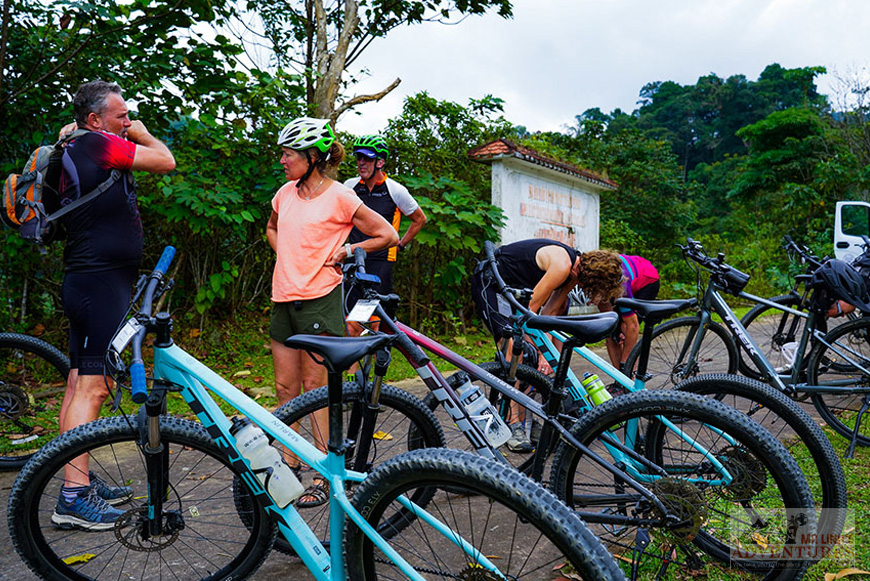 The right bike s the one you know how to repai | Mr Linh's Adventures
Ninh Binh by bike
The terrestrial alternative to Halong
Same karst, same magic, without the floating hotels. Cycle routes were officially marked in 2026. Ideal for those who believe elevation gain is a design flaw in nature.
Info: 60-90 km | <300m elevation gain. Level: Leisure–Beginner
Alert: Narrow shared dikes. Discrete horn, no earphones. Charm here is earned in silence.
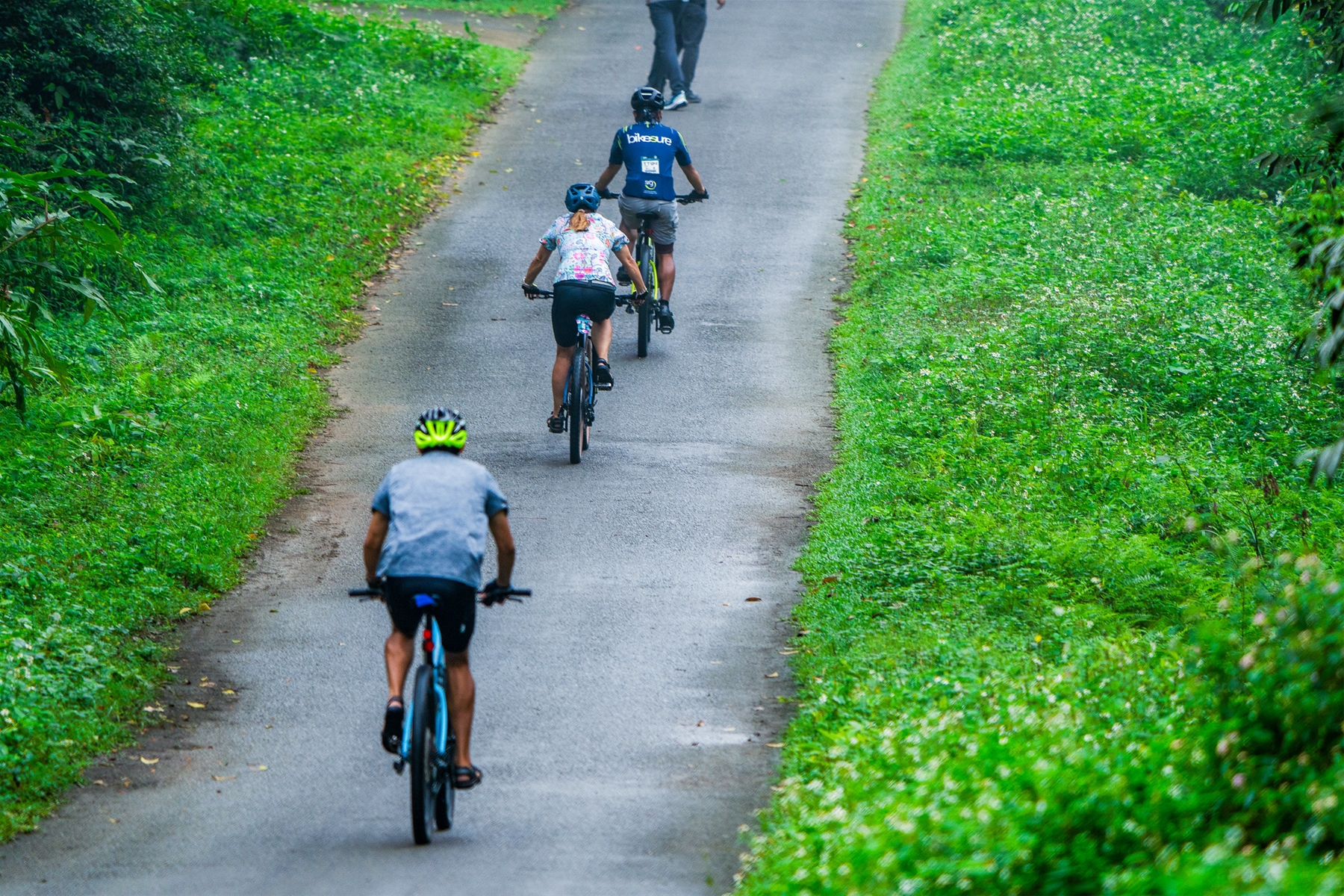 Cycling is for living the roads. Not doing them | Mr Linh's Adventures
Dien Bien & Northwest
The luxury of solitude
History here has weight. The terrain, character. This territory is off mass tourism's radar. Precisely what makes it exceptional for adventurers.
Info: 180-250 km | 4,000-6,000m elevation gain. Level: Adventurer (self-sufficiency required)
Alert: Near-zero network. Distances look short on the map, but road condition doubles travel time.
These five zones are not boxes to tick. They are proposals for dialogue with the terrain. None is "done". All are lived.
3. Levels & Bikes: Choosing your ally
Choose your bike based on the terrain, not your ego. By 2026, the question will no longer be “e-MTB or not?” but “where does electric assistance really make a difference?”
- - Versatile gravel bike: Ninh Bình, Cao Bằng, gravel roads.
- - Hardtail or e-MTB (700 Wh+): Ha Giang, Mu Cang Chai, technical terrain.
- - Full-suspension mountain bike: Adventurers seeking total autonomy in the Northwest.
The e-MTB is no longer a crutch. It is a tactical ally for cols, provided you manage the weight (22-26kg), range (220V plugs available but not omnipresent), and accelerated brake wear.
The mechanical bike remains king of simplicity, lightness, absolute freedom.
The right bike is not the one that gets the most Instagram likes. It is the one you know how to repair, whose limits you understand, and which brings you back before the monsoon decides your schedule.
.jpg "Cycling in Vietnam") Northern Vietnam, a paradise for cycling | Mr Linh's Adventures
Northern Vietnam, a paradise for cycling | Mr Linh's Adventures4. Kit & Logistics
Rent or bring?
Rent or bring your own? The rental market in 2026 is well-established. Rent locally if you’re traveling light and want to support the local economy. Bring your own if your body type requires a specific frame.
Support vehicle: Essential in technical terrain or for mixed-ability groups. At Mr. Linh’s Adventures, we believe that having support isn’t a sign of weakness, but rather a strategic move. A support vehicle is an all-terrain concierge capable of delivering fresh water, a repair kit, or picking you up if a fall turns your knee into a bruised eggplant.
Essential in technical terrain or heterogeneous groups. Support is not an admission of weakness, it is a deployment strategy. A 4x4 chase vehicle conjures cold water, a repair kit, or recovery when a crash turns your knee into an aubergine.
Accommodation: Book 2–4 weeks in advance during peak season. Be sure to request bike storage, an e-bike charging outlet, and laundry facilities. Comfort here means a hook on the wall to hang your clothes to dry and a host who understands that 8:30 p.m. is bedtime.
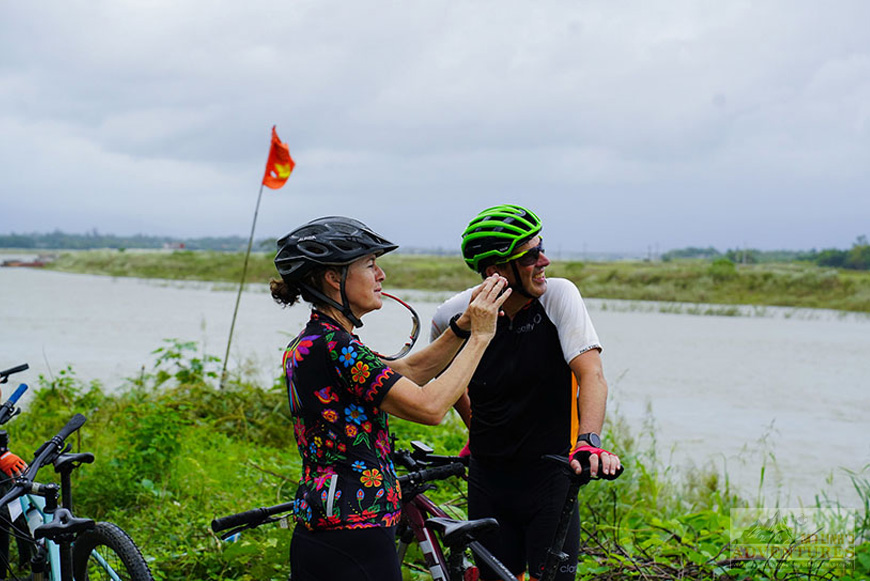 Cycling in Northern Vietnam offers far more than kilometres on the counter | Mr Linh's Adventures
5. On the ground: Traffic, navigation, health
The Vietnamese highway code
The myth goes that driving in Vietnam is like a free-jazz improvisation. The reality is simpler: Vietnam’s traffic rules are a living, organic entity based on the law of the jungle.
Non-negotiable rule: Drive at a steady speed and avoid sudden braking (unless it’s an emergency; surprise causes accidents). Predictability saves lives. Vietnamese drivers anticipate your path. The horn isn’t an insult; it’s a warning signal. A certified helmet is mandatory, wear a reflective vest at dusk, and keep your right hand free for signaling.
Navigation? OSMAnd or Guru Maps + preloaded GPX files + screenshots of critical intersections. Test airplane mode at home. If it works there, it’ll work at Ma Pi Leng. The karst terrain cuts off the signal without warning, and rural 4G/5G coverage is still nonexistent in the deep valleys. A paper map folded in just the right place remains your best lifeline in case your smartphone turns into an electronic paperweight.
Hydration: Drink before you get thirsty; eat before you get hungry. Delayed hydration is the leading cause of energy crashes. Safe street food: Look for the local line, not the Instagram-worthy outdoor seating area. Essential kit: Blister bandages, antiseptic, gauze pads, pain reliever, oral rehydration salts (Oresol), tourniquet. In case of a fall: call your assistance provider BEFORE going to the emergency room. Document the situation; don’t try to play doctor.
.jpg "Terrace rice fields - Northern Vietnam") Support is not an admission of weakness, it is a deployment strategy | Mr Linh's Adventures
Support is not an admission of weakness, it is a deployment strategy | Mr Linh's Adventures6. Responsible tourism & immersion
Northern Vietnam isn’t just a backdrop. It’s a living landscape where agriculture, history, and daily life intertwine at every turn. In 2026, with the rise of gravel and e-MTB riding, “riding light” isn’t enough anymore. You have to ride right.
Field rules: < 20 km/h in residential areas. No Bluetooth speakers on the trails (the North has its own soundtrack). Photos only with permission (“Can I take a photo?”). Strict respect for dikes, rice paddies, and altars. Take everything you bring with you. Even “biodegradable” packaging takes months to break down at high altitudes. A Ziploc bag in your backpack weighs 2 grams and saves the landscape.
Want to help out? Buy local, directly. Choose certified homestays and cooperatives over middlemen. Avoid unorganized voluntourism; opt for structured initiatives instead. And share your feedback: your annotated GPX files, trail reports, and honest reviews help build our collective database.
Updates & next steps
This guide is a snapshot. Contribute to OpenStreetMap. Subscribe to local actors' feeds. Cycle touring in the North does not freeze; it refines with every pedal stroke.
Slip your phone into a waterproof case. Charge your power bank. And remember: the best resource is the smile of the village mechanic who hands you an Allen key saying:
Cứ đi đi, đường đẹp lắm. (Go on, the road is beautiful.)
We fold the maps.
Northern Vietnam is not tamed. It is negotiated, respected, and eventually offers far more than kilometres on the counter.
The saddle awaits !
Going furter: