Introduction
Ba Be National Park is a dream destination for nature lovers. In these landscapes of karst mountains and calm waters, the bicycle stands out as the ideal means of transport for a total and authentic immersion. Choosing two wheels means embracing an ecological, silent, and slow journey, which opens the door to unforgettable encounters with local artisans, far from the hustle and bustle of classic tours.
.jpg "Cycling in Ba Be") Cycling in Ba Be is an act of responsible tourism | Mr Linh's Adventures
Cycling in Ba Be is an act of responsible tourism | Mr Linh's AdventuresAn ecological and human choice
Cycling in Ba Be is an act of responsible tourism. By minimizing your carbon footprint, you contribute to the preservation of this national park. But the greatest advantage of cycling is its ability to break down barriers. The lack of a motor and a body allow you to blend into rural life; the cyclist is perceived as a traveler, not just a rushed tourist. Furthermore, the slow pace of cycling allows for spontaneous stops, such as greeting farmers in the rice fields or exchanging a smile with Tay women working under their stilt houses.
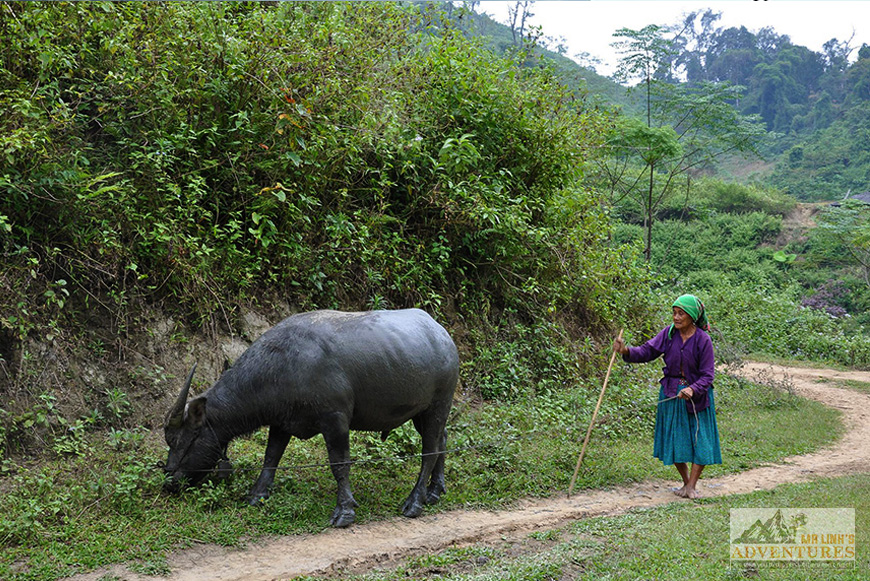 Cycling in Ba Be offers a direct observation of daily Tay life | Mr Linh's Adventures
Ba Be by bike: Three degrees of immersion
The roads around Ba Be are mostly paved (generally with concrete, for its durability and resistance to heat and heavy rain). But the true adventure is found on the stabilized side paths, which are perfect for a mountain bike (VTT) or a touring bike.
The Tay villages loop (Easy to moderate)
This route is
the heart of the Ba Be cycling experience and focuses on Tay culture. Start from Pac Ngoi or Coc Toc, the two main homestay villages on the lake's edge, notably featuring
Ba Be Jungle Houses. Then set off along the roads and paths that connect these two villages, venturing onto the small tracks that cross the rice fields and corn fields.
Highlights: Direct observation of daily Tay life, from fishing (with the famous local dugout canoe, called thuyền độc mộc) to agriculture.
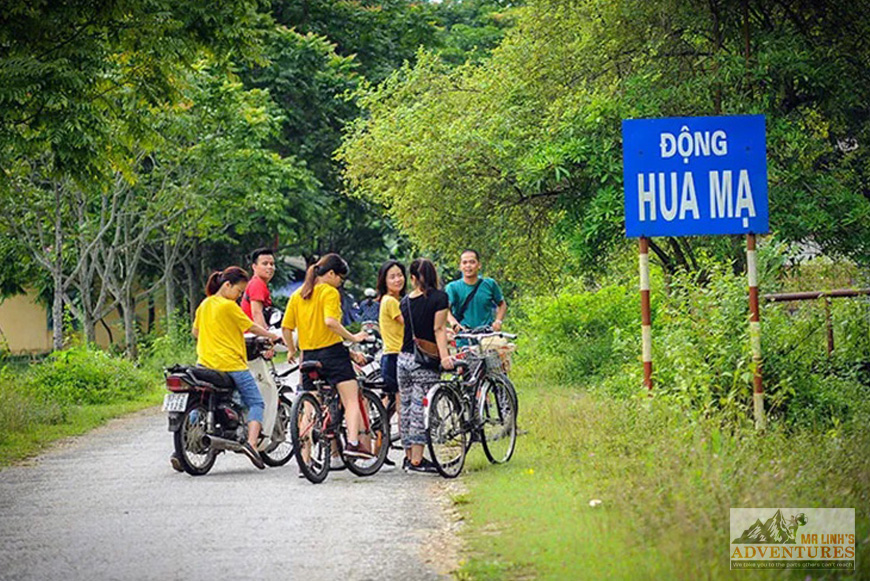 On the road to Dong Hua Ma | Mr Linh's Adventures
The route to Hua Ma Cave (Moderate)
This itinerary combines physical effort with natural heritage, moving away from the tourist center. Head east, taking the DTL254 road, then branching off towards Hua Ma Cave. This route offers panoramic views of the valley and passes through less frequented hamlets. It is an excellent way to get away from the heart of the park. The road is a bit technical (it climbs steadily towards the cave), but the descent is spectacular.
The Tham Phay expedition (Bike + extreme trek)
This is for cycle tourists looking for a full day of adventure after they park their bike. Tham Phay Cave (dubbed the "Son Doong of the North") is a major caving destination located away from the main roads (Na Slai sector, Hoàng Trí commune). You will cycle to an agreed starting point, but exploring the cave requires leaving the bike and undertaking a long hike before continuing the underground exploration, which includes several submerged passages.
Mandatory: This expedition requires hiring a specialized local guide and appropriate safety equipment (helmet, lighting, gloves). It is the ultimate adventure experience in Ba Be!
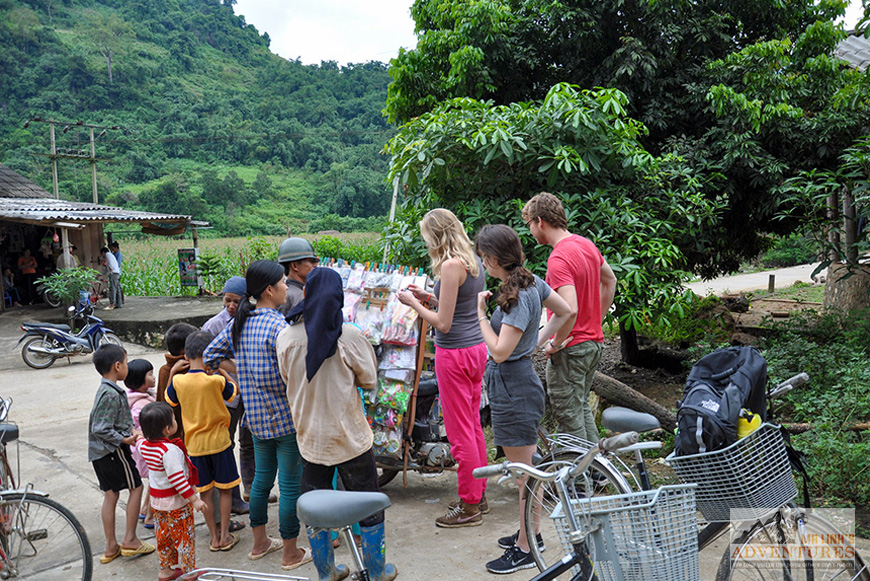 Cycling gives you the leisure to stop spontaneously | Mr Linh's Adventures
Local craftsmanship: The treasures of encounters
Cycling gives you the leisure to stop where a bus never would: at a local's home. This is a unique opportunity to discover and acquire meaningful handicrafts, directly from those who perpetuate ancestral knowledge.
Indigo color
The Tay people, who are the majority in the villages bordering the lake (especially Pac Ngoi and Coc Toc), are renowned for their excellence in the art of weaving and indigo dyeing. As you cycle the country roads, you will have the chance to observe women at work under their stilt houses. They spin cotton and use natural dyeing techniques to produce scarves, bags, and traditional clothing in shades of indigo blue so deep they appear almost black. Buying these pieces directly from the weavers is the most authentic and ethical way to support their family economy.
Embroidery and culinary delights
Venturing onto the more demanding tracks leading to the park's heights, you will sometimes come across the Dao and H'mong communities. These ethnic groups are distinguished by crafts focused more on embroidery and, historically, on silver work. The embroidered patterns on their traditional outfits are true markers of identity. Their patience and meticulousness in this art make for precious souvenirs.
Furthermore, be sure to taste the local specialties during your homestays: Sticky Rice (Cơm Lam), cooked in a bamboo tube, lake fish (Cá Hồ Ba Bể), and fresh local vegetables.
Mr. Linh's advice: When you wish to purchase an item, do not hesitate to politely and with a smile ask to see the person who made it. This values their work and ensures your money directly supports local craftsmanship and traditions.
Family cycling in Ba Be National Park | Mr Linh's Adventures
Preparing your cycling trip to Ba Be
- Rentals: You can rent bikes (often basic mountain bikes) directly from the homestays on site.
- Best Season: December to April offers a dry and cool climate, ideal for cycling.
- Accommodation: Choosing a Tay Homestay is essential for a complete cultural immersion.
- Local Cuisine: Be sure to taste the lake fish (Cá Hồ Ba Bể), Sticky Rice (Cơm Lam) cooked in a bamboo tube, and the fresh local vegetables.
Cycling in Northern Vietnam: Broadening the horizon
While Ba Be is the ideal gateway for
Slow Tourism and local encounters, the mountains of the North are the ultimate destination for the cyclist seeking physical effort and grandiose panoramas.
Admittedly,
Ba Be National Park offers an excellent starting point for cycle touring, with easy-to-moderate routes focused on cultural immersion and the lake. But
Northern Vietnam is primarily a high-mountain territory, famous for its
cycling challenges. Regions such as the
Ha Giang Loop (and its legendary passes) or the highlands of
Cao Bang offer multi-day expeditions. The effort there is considerably more intense than in Ba Be, requiring long climbs and better technical skills.
Regarding equipment, note that while homestays in Ba Be can provide basic mountain bikes for the Tay villages loop, cyclists venturing into the mountainous regions must plan for a higher-quality touring bike or mountain bike (with a good gear and braking system) to navigate the steep slopes and sometimes uneven roads. But everywhere, despite (or because of) the difficulty, cyclists are rewarded with breathtaking panoramic views of the terraced rice fields and karst landscapes, far from the beaten path.
.jpg "Explore local life by bike") Choosing cycling is choosing a slow, but infinitely richer journey | Mr Linh's Adventures
Choosing cycling is choosing a slow, but infinitely richer journey | Mr Linh's Adventures
Time regained
By choosing Slow Tourism, you opt for respectful immersion and ecological commitment. The bicycle, in fact, becomes your silent passport to the heart of the traditions of Northern Vietnam's minorities. It reveals the beauty of the landscapes at a human pace, where authenticity is offered to those who know how to take the time.
By stopping to exchange a smile with the villagers, taking the leisure to seek out the artisan who made your souvenir, or simply savoring the silence away from the hustle of classic tours, you are not just visiting Ba Be: you are living Ba Be.
Choosing cycling is choosing a slow, but infinitely richer journey.
It is the choice of tourism that is fully meaningful.