Introduction
The Land of the Dragon isn't visited. It's felt. It's lived. But only if you accept that "seeing everything in ten days" is a fraud, and that friction is a filter. Not a bug.
There are two ways to travel Vietnam. The first follows the flow: Hoi An and its lanterns, Nha Trang and its beaches, Ha Long Bay and its luxury cruises. Comfortable, predictable, Instagrammably satisfying.
The second method demands embracing friction. The kind where your GPS abandons you to live out its life as a paperweight, where your hotel's website has secessionist functionality, where you mime room-rate negotiations because nobody speaks English.
Here are three itineraries that privilege controlled friction, and give you the Vietnam that 90% of visitors never see.
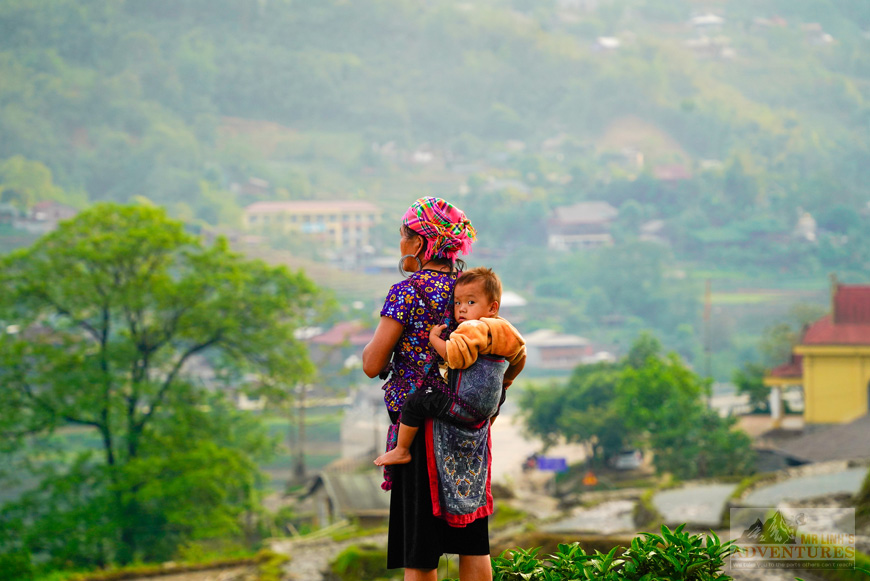 Far from the city center, Sapa remains authentic | Mr Linh's Adventures
Mistake number one: Trying to "do it all"
Vietnam stretches 1,650 km as the crow flies. That's Paris to Seville. Yet agencies still sell "North-Center-South in ten days" circuits like you're off for a weekend in Normandy.
The math is brutal: two hours flying Hanoi–Ho Chi Minh City, thirty hours by train, or forty hours by bus. Whatever you choose, you sacrifice 40% of your trip to transfers. This isn't travel. It's transit with scenery.
The solution isn't running faster. It's accepting that "seeing everything" is marketing fraud.
Mistake number two: Following the crowds
Hoi An at 8 PM. Thousands of lanterns, zero engines, a hundred thousand smartphones raised. Beautiful. Also a human density that transforms experience into mass spectacle. Nha Trang, same fight: beaches, water parks, tour buses of Russians in tracksuits. The South fares no better: Ho Chi Minh City's nine million residents, eight million scooters, and your personal space reduced to nothing.
These places exist because they're accessible. Paved roads, international airports, four-star hotels with English-speaking staff. Nothing wrong with that. They just don't give you Vietnam. They give you a version optimized for Western comfort, with local cuisine as an optional add-on.
Mistake number three: Fearing friction
Friction is what happens when your GPS ditches you to live its life as a paperweight, when your hotel has a separatist-featured website, when you mime haggling over your room price because no one speaks English. It’s annoying. It’s uncomfortable. It’s the filter that separates the tourist from the traveler.
In 2026, Vietnam's friction lives inland. Not on the coast. Not in the deltas. In the provinces that guidebooks ignore because they demand time, adaptation, and acceptance of a certain discomfort.
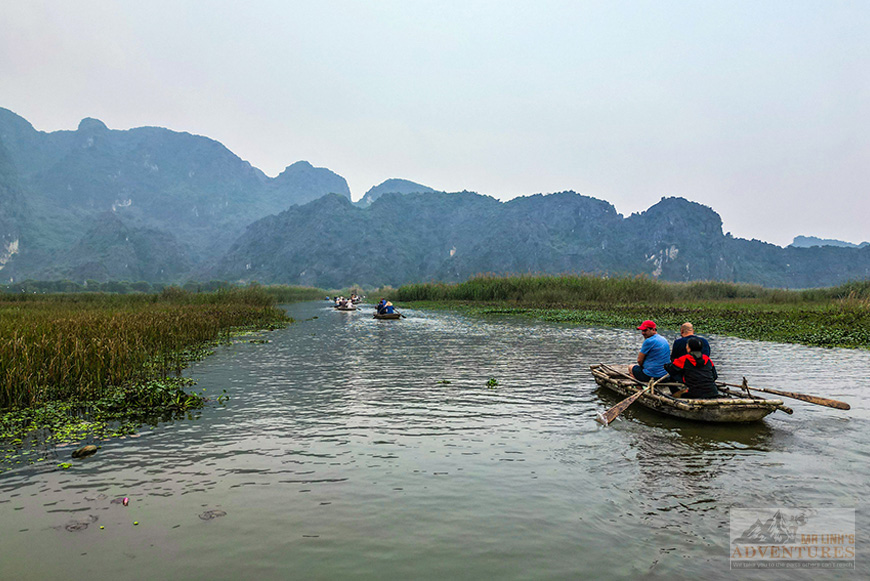 Van Long, the understated charm of Halong Bay on land | Mr Linh's Adventures
Three itineraries that privilege controlled friction
Itinerary one: The Vertical North (ten to fourteen days)
Hanoi, then Van Long - not Ninh Binh, saturated. Same karsts, ten times fewer people, rice paddies to the horizon. You sleep in a homestay, flee the group boats by electric bike, climb Mua Cave peak. Everyone can't be wrong: the view is spectacular, even if you share the summit with others.
Then northwest. Not Ha Long Bay : too late, too saturated. Sa Pa or Mai Chau (or better: Pu Luong), but with a twist: you don't stay in "authentic" villages two kilometers from town. You rent a motorbike, climb toward Ta Phin or Lao Chai, accept that your accommodation is a communal house with floor mattresses and electricity cutoff at 9 PM. The mountain cold in January (5–15°C) reminds you that Southeast Asia has winters too. And that when to visit Vietnam radically changes the experience. That's the price of solitude.
Want this kind of immersion? Mr Linh's Adventures organize treks with homestays, minus the crowd of standard circuits.
►
Have a look to our Mai Chau - Pu Luong Trekking 3 days 2 nights
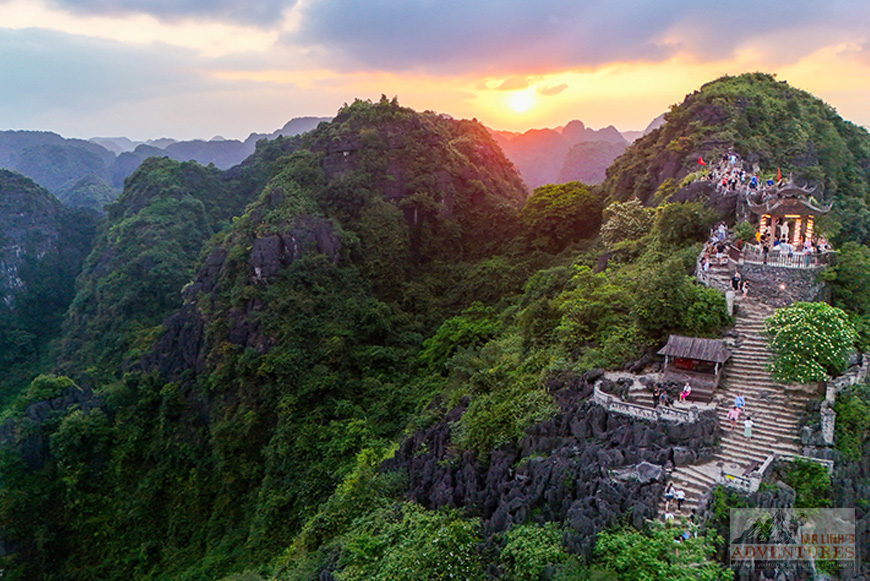 Spectacular viewpoint from Hang Mua | Mr Linh's Adventures
Itinerary two: The Central Highlands Crossing (twelve to sixteen days)
Hue, then west on Route 49. Toward A Luoi: four hours of mountains, phone useless, hotel resembling a 1980s post office. You're unsure if it's an insult or a compliment. Children chase your motorbike because a foreigner remains an event.
Route 9 to Khe Sanh: bomb craters turned ponds, abandoned air bases, jungle that reclaimed everything in fifty years. You don't come here to "like." You come to understand what 75,000 tons of bombardment in seventy-seven days means.
Phong Nha, but not the spectacular cave. Tu Lan: two to four days trekking, forest bivouac, swimming underground rivers by headlamp. $150–250, eight people max, no signal for forty-eight hours. You sleep in a cavity at constant 20–22°C. Physical, humid, perfect.
Mr Linh's Adventures offer this experience in small groups, with local guides who know these caves better than their own pockets.
►
Central Vietnam Adventure Trekking 7 days 6 nights
Then Gia Lai. The 2026 Year of Tourism is preparing infrastructure, but Pleiku and Kon Tum remain cities of 200,000 and 50,000 with fewer than 10,000 foreign tourists annually. Ethnic markets Saturday mornings, traditional textiles and knives, no souvenirs because there's no clientele. Your hotel has an email. But nobody answers. You arrive, you negotiate, you discover.
Da Lat as exit, via Route 14 from Gia Lai. Four hours of mountains, decompression chamber before the chaos of Ho Chi Minh City.
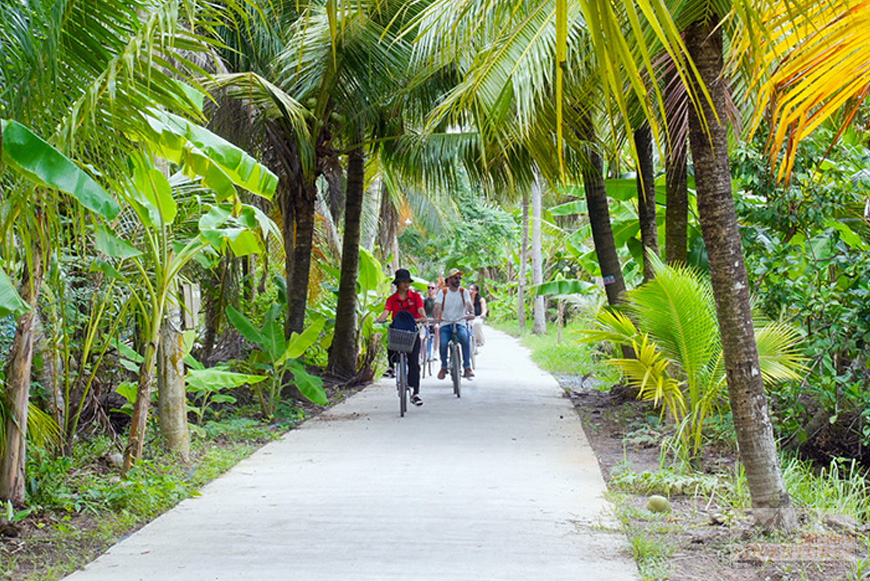 Cycling along the aroyos of the Mekong delta | Mr Linh's Adventures
Itinerary three: The Wild South, minimalist version (seven to ten days)
Ho Chi Minh City, but quickly. Two days suffice to understand that nine million residents and eight million scooters create permanent kinetic energy. Then you flee. Straight to Ben Tre.
Not the coconut-island/honey/coconut-candy circuit. The real province, accessible by local ferry from Ham Luong pier. Coconut islands, dirt roads, and this sincere question from locals: "But are you lost?" You rent a bike, follow the tracks, accept that nobody understands why you're here without a guide or printed itinerary.
Then Can Tho, moving up slowly via back roads. You rise at 5 AM for Cai Rang before the tour buses. You see the real delta: 40,000 km², twenty million people, 50% of national rice production, an aquatic slowness contrasting with the metropolis's hypertension.
Finale at Con Dao. Quickly. The archipelago of sixteen islands, six thousand residents, former prison, beaches without infrastructure, sea turtles, and a silence that Vietnam has nearly forgotten. But the window is closing: $2.5 billion investment by 2045, airport expansion for two million passengers annually, land reclamation projects, golf-resort complex underway.
Gia Lai is preparing its big day. Con Dao is already selling it.
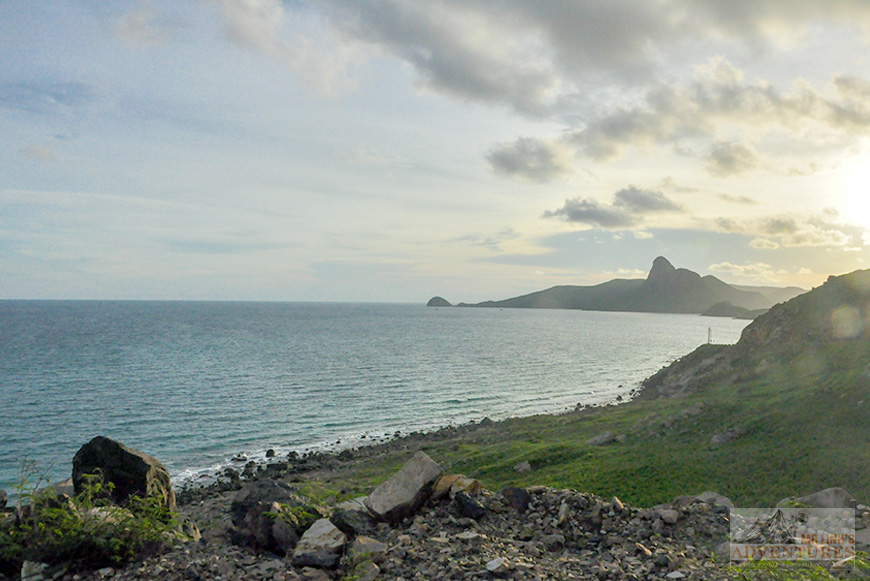 Discover Con Dao now, before mass tourism turns paradise into a product | Mr Linh's Adventures
The final choice
These itineraries share one trait: they trade predictable comfort for memorable unpredictability. They demand more preparation time, higher ambiguity tolerance, and acceptance that "pleasant" isn't always the primary criterion.
Classic Vietnam, the kind sold on app coded by AI that never held a pair of chopsticks, exists because it answers legitimate demand. The one proposed here exists because some travelers prefer stories to photographs.
Friction, ultimately, isn't a bug. It's the filter.
Explore more: