Giving meaning to travel
At Mr Linh's Adventures, we believe the train is no longer the choice of those who can't afford to fly. Across the 1,726 km of the North-South line, Vietnam offers a singular railway experience: six daily trains connect Hanoi to Ho Chi Minh City, traversing more than 20 provinces over 32 to 37 hours.
This isn't slow travel for the sake of it. It's an elegant way to discover a country in motion, without sacrificing basic comfort.
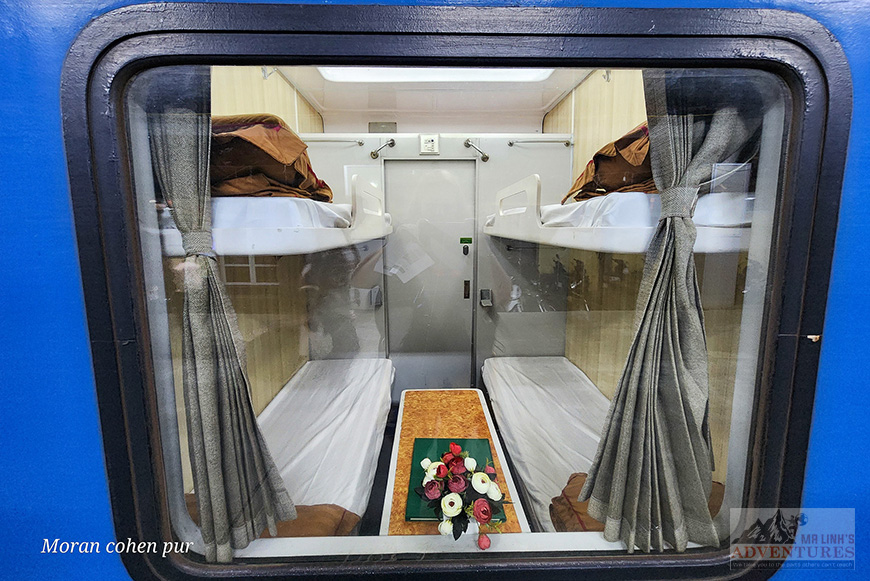 The usal basic but comfortable train cabin | Mr linh's Adventures
A legendary line: The Reunification Express
Officially designated the Transindochinois during the colonial era, this railway artery has linked Hanoi to Ho Chi Minh City since 1936, with a 20-year interruption during the war; the time needed to rebuild 1,334 bridges and 158 destroyed stations.
Today it bears the name Reunification Express, a political title that actually constitutes the premium offering: trains SE1, SE2, SE3, SE4 with air-conditioned carriages renovated in 2015-2016 and relative reliability on tracks inherited from the French era.
> Mr Linh's Tip: The rail ends at the station, but your immersion begins here. Avoid the arrival chaos: our guides await you for a private transfer to the secret trails of the North.
►
Fansipan Mountain Trekking 2 days 1 night
Flagship routes
- Hanoi → Hue → Da Nang (14-16h) : The most spectacular segment, crossing Hai Van Pass with views over the South China Sea. Book the left side (A-C) for the best vistas.
- Da Nang → Nha Trang (9-10h): Crossing the central coastal rice paddies. Less spectacular, more contemplative.
- Nha Trang → Ho Chi Minh City (7-8h): Descent toward the Mekong Delta. The least charismatic segment; fly if you're short on time.
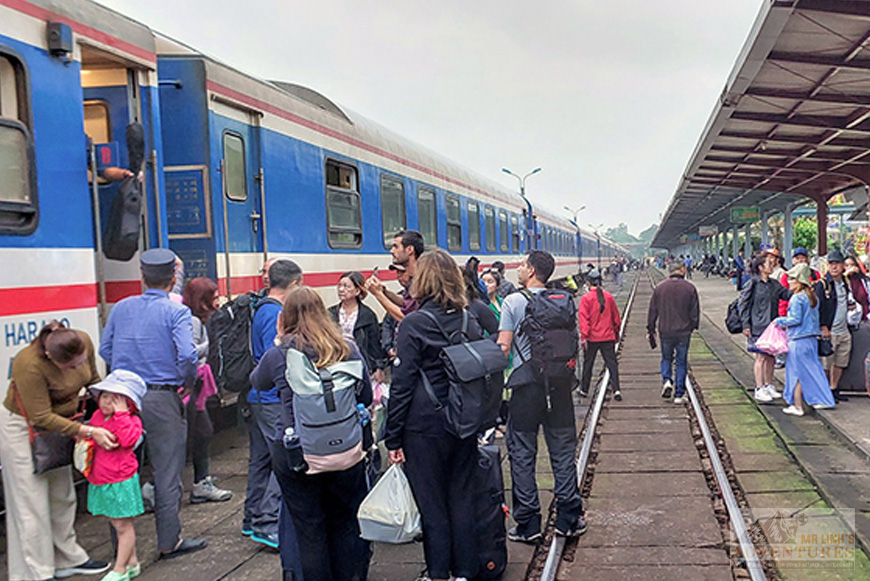 A train station, somewhere in Northern Vietnam | Mr Linh's Adventures
Travel classes: From spartan to comfortable
The Vietnamese system offers several comfort levels, summarized below:
Soft Sleeper (4 berths)
The default choice
- Price: €35-50 for Hanoi-Da Nang
- Configuration: 4 bunk beds, air conditioning, individual curtains
- The lower berth costs 10-15% more but offers direct access and under-bed storage. The upper berth requires agility: no ladder, just a foldable footrest.
VIP 2-berth
For those wanting a little privacy
- Price: €65-80 for the same route
- Private compartment with upgraded bedding
- Justified if traveling as a couple. Otherwise, the premium doesn't translate to a fundamentally different experience.
Hard Sleeper (6 berths)
The spartan option
- Price: €25-35
- Acceptable for short journeys (under 8 hours). Beyond that, the narrow beds and close quarters wear thin quickly.
Luxury Carriages (The Vietage)
For those seeking an Orient Express-worthy experience.
Between Da Nang and Quy Nhon, this ultra-exclusive carriage offers gourmet meals, massages, and a cocktail bar. The pinnacle of railway refinement.
Avoid Soft Seat on overnight lines. A reclining seat is no substitute for a bed, regardless of the quality of the synthetic leather.
> Mr Linh's Tip: Collect memories, not just time saved. Vietnam is experienced through its slowness and encounters. Let us design the authentic journey you deserve.
►
Off the beaten tracks North Vietnam 8 days 7 nights
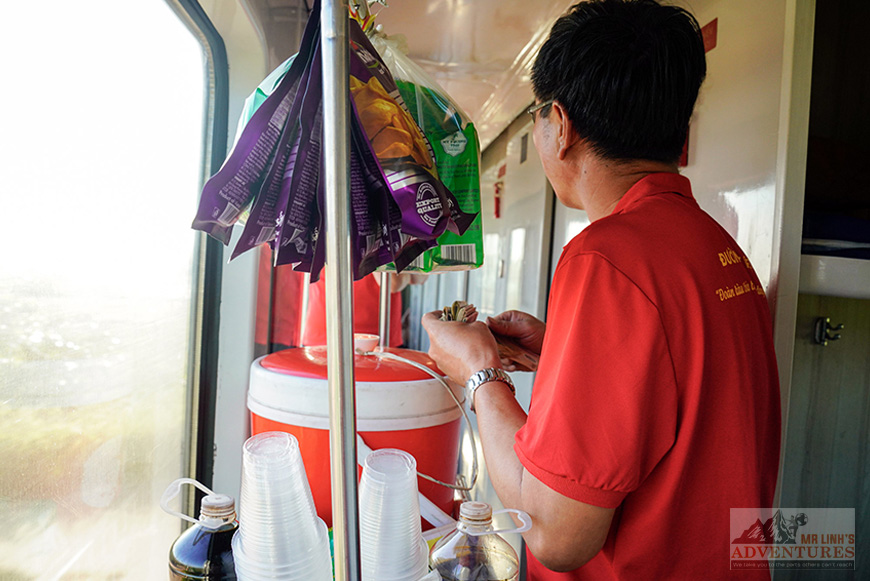 Restaurant cart with snacks : enjoy local onboard food! | Mr Linh's Adventures
Private operators: Marketing or real added value?
Several private companies (Livitrans, Violette, Lotus Train, Golden Trains) operate carriages attached to regular trains. Their promise: superior comfort at double the price. The reality is more nuanced.
On the Hanoi - Hue - Da Nang route, Livitrans and Violette offer 4-berth compartments at ~€70. Inspection reveals carriages identical to Vietnam Railways', with different colored bedding and complimentary snacks. The upgrade only justifies itself if traveling as a couple and wanting to guarantee a 2-berth compartment without sharing risk.
On Saigon - Nha Trang, Golden Trains and Livitrans maintain slightly higher standards on trains SNT1/SNT2, but the difference remains marginal.
On Hanoi - Sapa (Lao Cai), however, Fanxipan Express and Orient Express dominate with genuinely better-maintained compartments. This segment merits the investment.
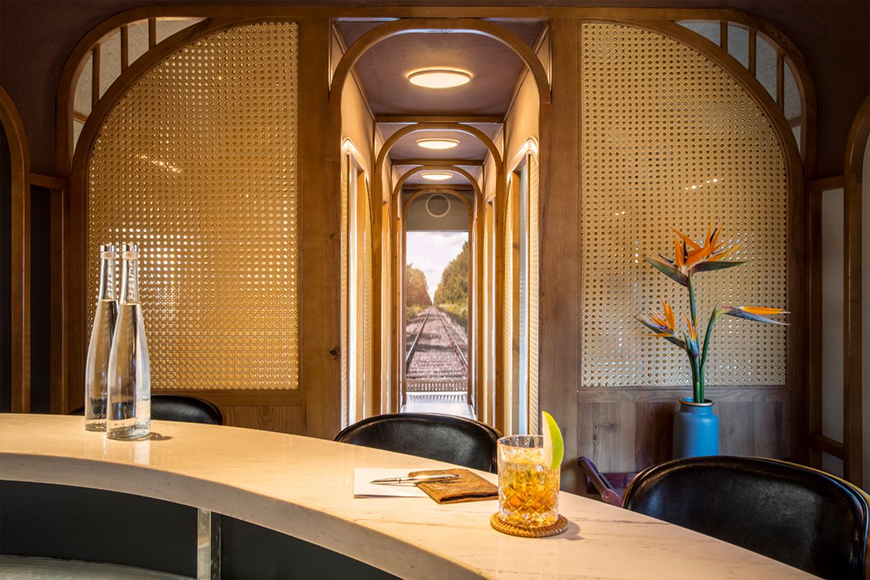 Vietage, a touch of luxury | Image : Vietage/Anantara Luxury Trains
How to book: The jungle of options
Official Ticketing (DSVN)
The
dsvn.vn site displays real fares without commission. Problem: the rudimentary interface and persistent refusal of many foreign bank cards make it impractical for most international travelers.
Intermediaries
Two platforms share the market:
Baolau (founded 2013 by Spanish entrepreneurs based in Vietnam)
- Commission: $1-3 per ticket
- Major advantage: seat/berth selection on interactive plan, near-instant confirmation
- Payment: Visa, Mastercard
- Ideal for choosing your seaside side on the Hue-Da Nang route
12Go.Asia (Singaporean operator, 2012)
- Commission: $3-5 per ticket, often inflated by hidden fees (currency conversion, pre-checked insurance)
- Customer support via chatbot and email; slow or absent responses in urgent cases
- Risk of late confirmation or last-minute changes without notice
- Verdict: Works for simple, non-urgent journeys. Avoid if you have date constraints or travel in groups.
Booking timing
- Sales open: 60 days before departure (sometimes 90 days for full Hanoi-Saigon journeys)
- Tết (Vietnamese New Year): Book immediately upon opening if traveling late January/early February
- Off-season: Possible to buy 2-3 days ahead at the station, but the best trains (SE) often sell out
On board: What you need to know
The reality of an overnight sleeper:
- - Luggage: Soft bags mandatory. 4-berth cabins only accommodate carry-on under lower bunks. Large hard cases must be checked (chaotic procedure upon arrival).
- - Food: Wandering restaurant cart with hot meals at ~40,000 VND (€1.50). Variable quality, acceptable for a local experience. Bring your own provisions.
- - Cleanliness: Clean but basic toilets (squat or Western depending on carriage), exterior sink with mirror.
- - Comfort: Expect rolling. Vietnamese meter-gauge tracks aren't known for smoothness. The lateral motion is notable, sometimes soporific, sometimes… well… just the opposite.
- - Equipment on newer trains (SE1/SE2/SE3/SE4): Individual power outlets, Wi-Fi (capricious), individual reading lights, and non-adjustable air conditioning (bring a light sweater).
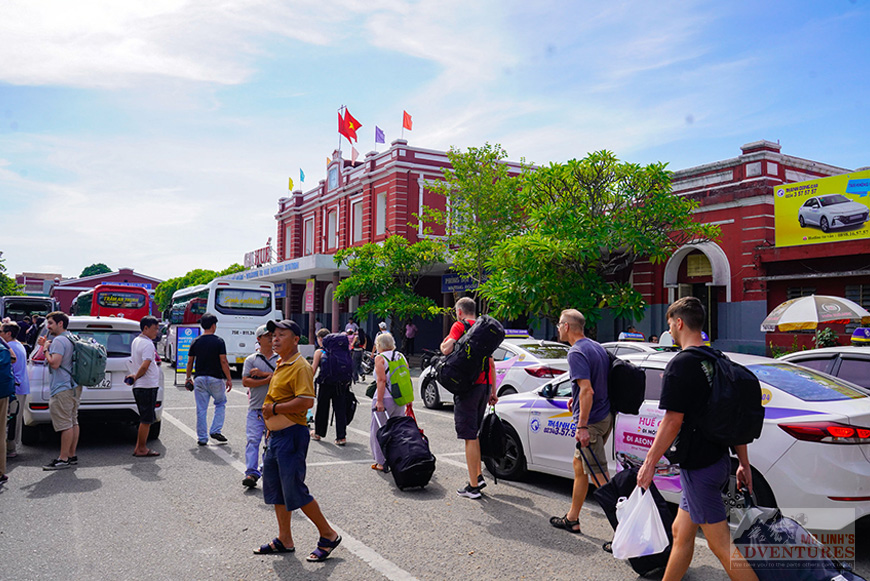 Charming Hue Train Station | Mr Linh's Adventures
What operators don't tell you
On "private trains"
Livitrans, Violette and company don't own their own locomotives. They lease carriages from Vietnam Railways, refresh them with colored bedding and a complimentary water bottle, then charge double. The actual comfort is identical. What you're paying for is the guarantee of not sharing your compartment with a stranger, not a fundamentally different experience.
On "breathtaking views"
Private operators sell the Hai Van Pass crossing as a guaranteed spectacle. Reality: the train passes this section between 11 AM and 3 PM, when sea mist and summer heat often reduce visibility to a few metres. Book left side (A-C) to maximize your chances, but don't buy a premium ticket solely for this promise.
On confirmation delays
Baolau and 12Go display "instant confirmation." In reality, your ticket is only confirmed when Vietnam Railways validates the booking, sometimes 24 to 48 hours later. During this delay, your seat is theoretically blocked, but overbookings exist. If you receive a "booking confirmation" email without an attached e-ticket, you don't yet have a guarantee.
On weather cancellations
During rainy season (June-October), trains may be cancelled for flooding. Intermediaries keep their commission even when service isn't rendered. Ticket refunds require a Kafkaesque procedure: in-person appearance at a main station with passport, sometimes impossible if you're already traveling. Reading the terms and conditions isn't enough; nobody really does until the day comes.
On onboard "Wi-Fi"
Newer SE trains promise connectivity. Reality: a shared 4G router across three carriages, playing capricious as soon as the train enters mountains or Hai Van Pass tunnels. Download your podcasts; the digital promise is more marketing than technical reality.
On "secure" luggage
4-berth compartments have no locked storage. Your bags sit under the lower bunk, accessible to anyone who slides the door open. Theft is rare but exists, particularly on overnight journeys where travelers fall asleep. A padlock on your bag won't deter a determined thief, but signals you're not a negligent tourist.
On "included transfers"
Some agency "train & transfer" packages include shuttle service from your hotel. What they omit: the "transfer" is often a motorbike taxi for your luggage and a separate vehicle for you, with unpredictable waits at the station. The comfort of an organized departure sometimes comes at the cost of approximate logistics upon arrival.
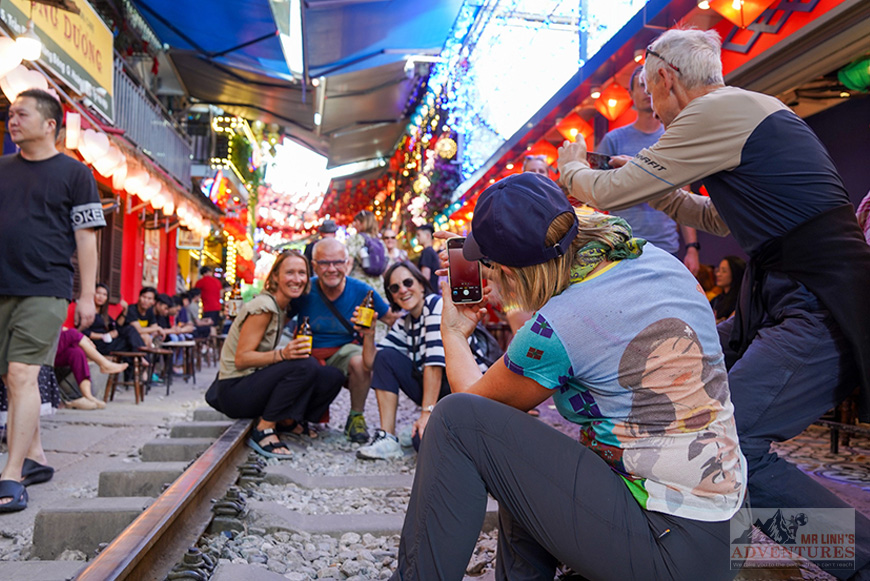 The famous Train Street in Hanoi | Mr Linh's Adventures
More than a journey, an emotion
The train in Vietnam is not the fastest way from point A to point B. It's an invitation to slow down, observe, and savor.
It's neither the Orient Express nor the Trans-Siberian. It's infrastructure in transition, heir to a colonial past and tumultuous reconstruction, that nonetheless offers an authentic window on the country… provided you accept its imperfections.
Traveling by train in Vietnam means accepting to lose a little time to gain a lot of memories.
So... Ready to answer the call of the rails?
Going further:
►
Vietnam 2026: The anti-scam guide for a meaningful journey
►
Vietnam Trip 2026: The "Solo vs Agency" match