The Great Misunderstanding
There exists, in the imagination of our fellow travelers, a stubborn legend: that traveling responsibly requires a Silicon Valley-funded bank account and the ability to pronounce "carbon footprint" without stumbling.
This is false. In reality, green tourism has simply been wrapped in kraft paper, stamped with a label, and resold at four times its price. As if saving the planet required your carbon footprint to be inversely proportional to your wallet's thickness.
In Vietnam, luxury isn't air conditioning set to 19°C. Luxury is time. It's sitting on a plastic stool, watching the phở broth bubble lazily, and realizing you're paying $2 for a meal that has traveled fewer meters than you have. Here, ecology is a return to peasant common sense: you repair, you share, and you avoid the superfluous because the Earth doesn't do credit.
The good news? You don't need to sell your scooter or join an ashram to apply this logic. Just change your filter. Apply the 3C Rule:
- ✓ Community: Does the money go to locals or intermediaries?
- ✓ Comfort (minimal): Do you keep the essential, discard the superfluous?
- ✓ Cost (real): Do you compare the sticker price to the hidden cost?
Follow this thread, and you'll cut ~30% from your budget while living twice as intensely as the tourist chasing a $4 coffee.
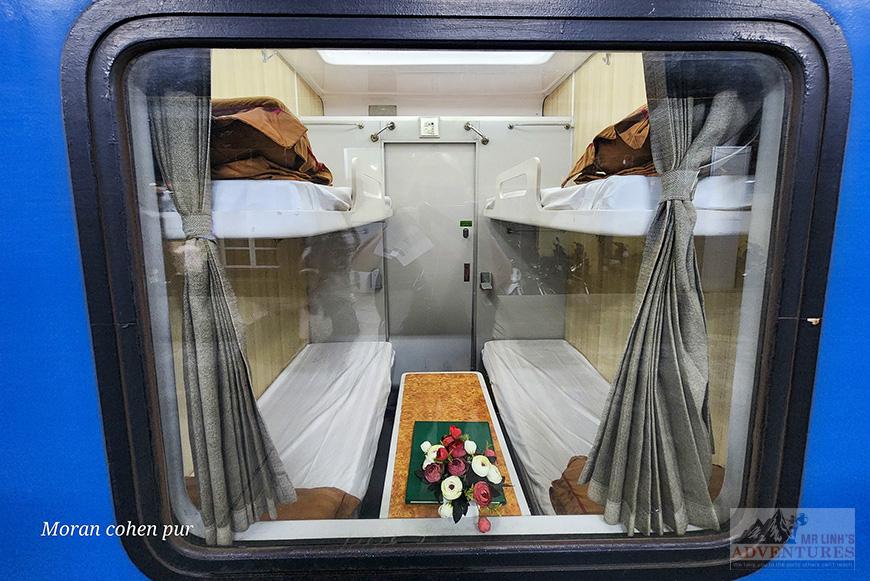 Traveling by train: a window to the world | Mr Linh's Adventures
Mobility: In praise of slowness (and rail)
There's a strange arithmetic in modern travel: you pay more to end up faster in a traffic jam.
The plane promises you 1h15 of flight between Hanoi and Hue. Add the queues, security, and taxi: you've spent four hours standing in line to see a cloud and dropped $70. It's a time scam.
The Reunification Express Train ("express" by antipoetry), is a time machine that, for the same journey, takes 12 hours for $15–25 in a soft sleeper. And above all, it gives you a window. Not a porthole. A real window where rice paddies, villages, and water buffalo scroll by with the philosophical indifference of animals who've understood that humans are in a hurry, but not always intelligent.
The calculation is brutally simple: One night in a sleeper train = transport + accommodation + a dose of dignity you'd lose anyway in an airport queue. Your carbon footprint drops by 70%. Your fatigue increases, yes, but it's the good fatigue: the traveler's, not the passenger's. And when you wake up, you're in the heart of the city, not in an industrial periphery hunting for a Grab.
We've been trained to optimize every minute. But here, optimization is slowing down. To know how to juggle with flights if the train isn't your cup of tea:
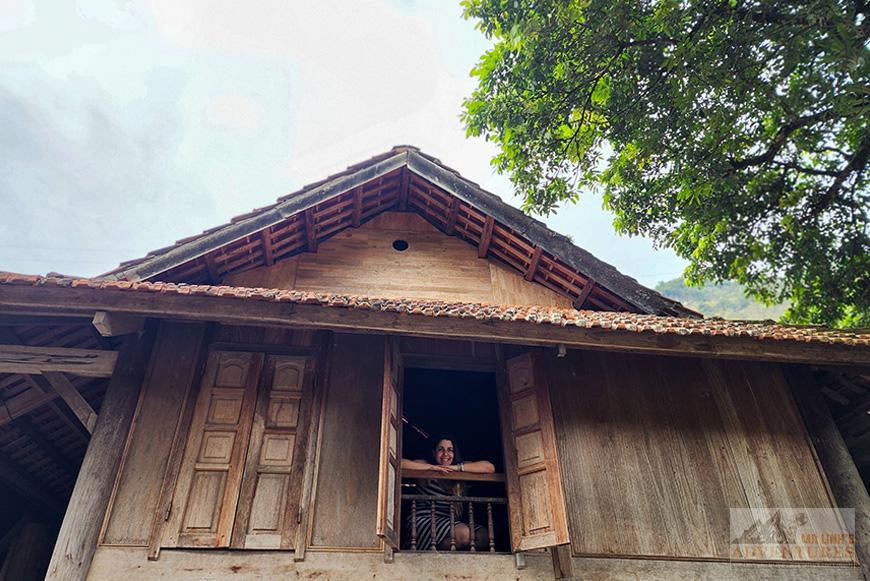 Authentic homestay : life without a filter | Mr Linh's Adventures
Accommodation: Between eco-marketing and floor reality
Branding is modern black magic: you plant three ferns in the lobby, slap "Eco" on the label, and boom, the price doubles.
"Ecolodge"? A word emptied of meaning: nowadays, it's often concrete repainted green, AC on overload, and a "Save the Planet" sign watching the forest die from afar. Ecology, apparently, practices very well between double-glazed windows.
If you truly want to travel responsibly without feeling like you're funding the construction of a temple to greenwashing, turn to real Homestays with the Tay, Dao, or Muong communities. You'll find raw reality: a bed under a mosquito net, a cold shower, and farmyard noises at 5 a.m. It's rustic, but that's precisely what you're paying for: life without a filter. And strangely, reality is often cheaper than its plasticized version.
Three clues not to get fooled:
- 1. Photos without Instagram shoots: If there are cracks and laundry drying, that's a good sign.
- 2. Description: They talk about rice cultivation or weaving, not "purification rituals."
- 3. Human reviews: If travelers mention the host's first name, you've got your deal.
Apply the 3Cs: local money, rustic comfort, real cost without commissions. Pay fairly, not more.
To book without falling into the "reconstructed tribal village" trap:
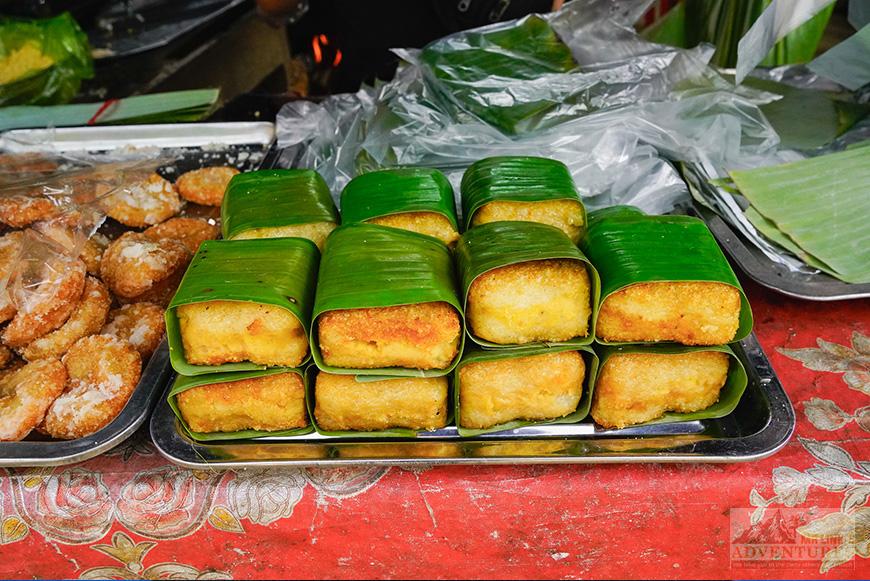 Eating local is the best way to get to know a country intimately | Mr Linh's Adventures
Food: The short circuit on a stool
The average tourist fears
street food. They imagine bacteria plotting in the shadows to overthrow their digestive system. So they take refuge in air-conditioned restaurants at 16°C with lounge playlists. Too bad.
In
Vietnam, responsibility is served on the sidewalk, between a gas stove and a plastic stool of undefined color. The
phở, the
bánh mì, the
bún chả: this isn't marketing. It's family logistics.
- ♦ Zero kilometers: Ingredients from the market across the street have no air miles.
- ♦ Zero waste (almost): You wash, you reuse. The banana leaf is making a comeback.
- ♦ Real economy: Your meal funds the cook's granddaughter's education, not a franchise headquarters.
Filter with the 3Cs, once again. Community: Does the money stay local? Comfort: Accept plastic and sweat? Cost: $2 versus $25 for the staging. Eating responsibly is finally sitting on the sidewalk instead of photographing it.
For those who want to know how to "eat like a local," it's here:
 Authenticity doesn't come in individual sachets; it's shared | Mr Linh's Adventures
Experience: Choosing ethics over spectacle
There's a fascinating phenomenon in tourist psychology: the burning desire to see people "living like before." It's a strange impulse that drives civilized individuals to pay to observe other individuals, usually dressed in ancestral costumes, pretending to pound rice when they'd probably rather just watch the Champions League on their smartphone.
Some mountain villages have turned into theme parks without barriers: inhabitants packaged as derivatives, reception synchronized to the tempo of air-conditioned buses. If the first thing you see is a line of buses and a millimeter-perfect choreography, you're not with locals, you're at the zoo. Authenticity doesn't come in individual sachets; it's shared. Or it is nothing.
Flee animal exploitation (rides, snake farms, monkey shows). This isn't culture. It's consumption in disguise.
Prioritize trekking led by locals (
Ba Be National Park,
Pu Luong…) or light cycle touring. The engine is your legs. The break, a chè stall the GPS doesn't know. These alternatives often cost less, but demand uncertainty and patience.
3C Filter: Is the guide paid directly? Do you accept walking in drizzle? Does a $50 ticket to "see the ethnic groups" fund the villages or just the agency?
Respect isn't bought. It's practiced. Asking permission before photographing, understanding that a ritual isn't a show: all this is free. And opens more doors than an excessive tip.
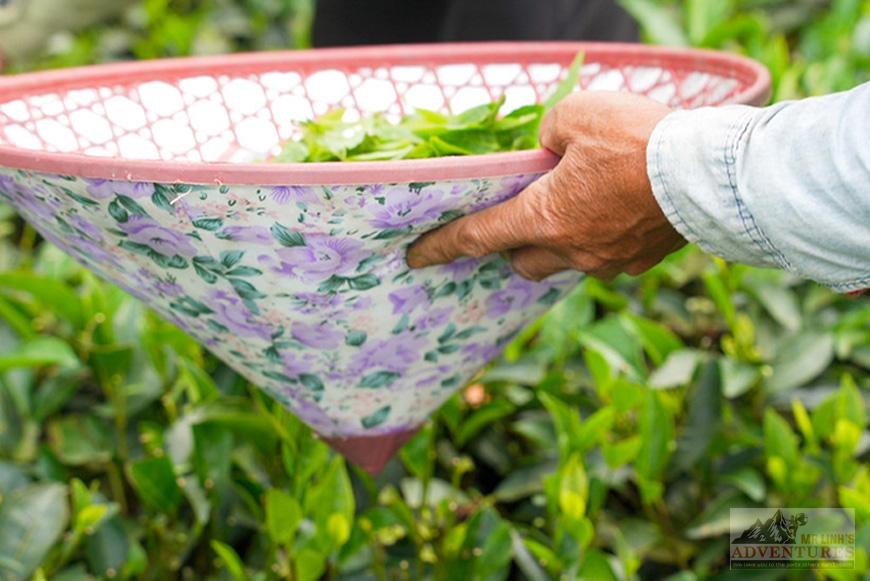 Help with the tea harvest | Mr Linh's Adventures
Travel as a compass, not a checklist
Traveling responsibly in Vietnam isn't asceticism; it's a filter; it's a rhythm, a way of allocating your budget intelligently.
Apply the 3Cs and you'll stumble upon a delicious paradox: reducing your impact increases your immersion. Slowing down makes you see more. Paying fairly makes you live better.
Vietnam doesn't need perfect travelers, but conscious travelers. Those who understand that every đồng spent is a ballot for the tourism they want to see grow. The best memory? Often not a photo, but a conversation in fine rain, around a $2 phở, with someone who isn't selling you anything.
If you're preparing an itinerary or hesitating between two regions,
contact us. A field tip is worth all the guidebooks.
Leave only your footprints. Take only memories (and a few extra đồng).
Links to go further: