We've all had that moment...
Every traveler worth their salt knows THE moment. That instant when, standing before a stall of "authentic souvenirs" manufactured in a Shenzhen warehouse, the human soul suddenly feels a mystical pull toward the perfect object. The object that, once brought home, will prove to others that you lived. Not visited. Lived. Or survived, in some cases.
Bad news, following a cosmic law rarely disproven: the perfect object is a chimera. Worse: if, by statistical anomaly, you find one, some official in khaki will confiscate it while looking at you as if you collected baby seal ears for keychains.
But don't despair. (Or do, if you insist, no judgment.) For there is another way. Several, actually. They are winding, sometimes legally ambiguous, and almost all require revising what "bringing back" truly means.
.jpg "Souvenirs from Vietnam") Some souvenir stands smell more like shipping pallets and express delivery than they do of authenticity | Mr Linh's Adventures
Some souvenir stands smell more like shipping pallets and express delivery than they do of authenticity | Mr Linh's AdventuresThe forbidden, or what will outlive your vacation
Here is a fundamental truth that souvenir shops omit: some souvenirs have the nasty habit of continuing to exist after you've paid for them. They breathe, multiply, or file complaints. Customs hates these three behaviors.
Here, then, is a reminder of what is best left in the hands of the country.
Customs officials hate surprises. So do we. At Mr Linh’s Adventures, we don’t just show you the way; we give you the inside scoop so that the only trace you leave behind in Vietnam is your tire tracks on the trail. Want a trip that doesn’t end up in a customs incinerator? Let’s talk about your next expedition.
Antiquities: when "old" becomes "crime"
Vietnamese law is clear: any object over 100 years old belongs to the national heritage. Not your shelf. This seems simple, until you realize that ceramics might be 150 years old, or 15, depending on the firing. And that the vendor whispering "ancient, very ancient" has been whispering that to everyone since 1987.
The trap: Even if you honestly believe you bought a replica, if it's real, you're a trafficker of cultural goods. And the Vietnamese prison for this offense has never been featured in tourist brochures under the "spa treatments" section
What lives and sometimes reproduces
Vietnam is a lush bestiary. For the sentimental traveler, it's both paradise and phytosanitary minefield.
"Easy to maintain" potted plants: That miniature orchid from the flower market? It may travel with friends: mites, fungi, or worse, insect larvae your local ecosystem has never met. Phytosanitary customs have detectors for this. They are sensitive, vindictive, and little inclined to mercy.
Natural "unidentified products: That bag of "medicinal roots"? You were told it cured everything. Liver, kidneys, melancholy, inability to find a parking spot. Customs consults its list. "Unprocessed plant products." Forbidden. Your quest for well-being turns into an interrogation by a government official wearing latex gloves, who decides whether you’re a naive tourist or a drug trafficker.
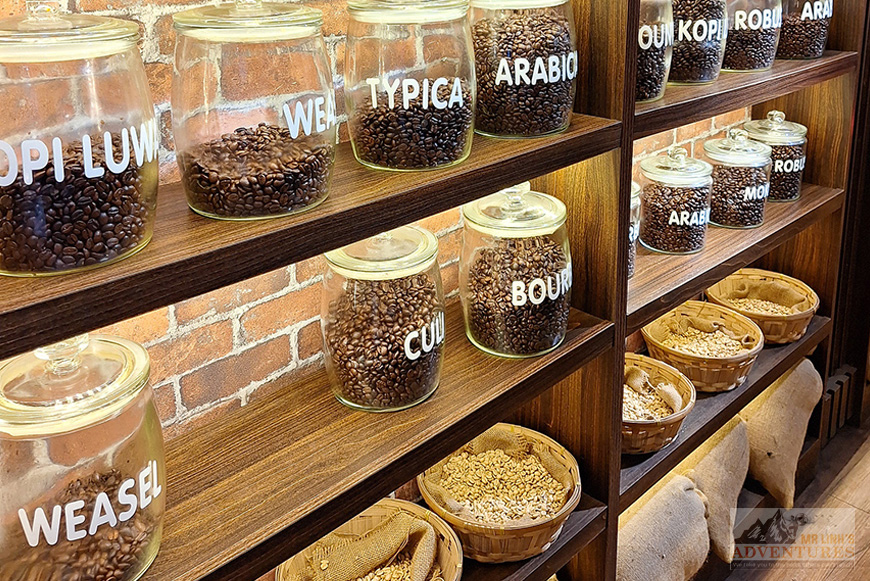 If the price of Kopi Luwak is less than $50 per pound, it's guaranteed to be fake | Mr Linh's Adventures
Snake alcohol "for virility"
You’ve seen it: rows of jars, reptiles in bottles, the promise of strength, and an awkward conversation with your doctor. Customs, meanwhile, checks several lists.
CITES first: is the species protected? The snake rarely lays its certificate of origin on the table. The vendor whispering "farm-raised" often practices the subtle art of documentary optimism.
Then, the liquid issue. Rượu thuốc can flirt with 70° and beyond. Transporting unlabeled alcohol in artisanal containers triggers a series of checked boxes - strong alcohol, biological specimen, "suspicious" object - that customs loves to tick.
Third problem: In many jurisdictions, any traditional medicine involving animal species requires permits that you do not have. In others, it is outright prohibited. Legal moral: Even in death, the snake has procedural rights.
Probable outcome: confiscation, specialized incineration, and you returning home with an anecdote, which was perhaps the unconscious goal all along.
Supermarket Kopi Luwak
"Café Weasel," featuring its bright-eyed civet. You thought to yourself: "The ultimate experience. Cà phê chồn, coffee digested by an animal, it’s art, it’s gourmet, it’s... what exactly is it?"
To which reality, and especially customs officials, will reply: whole grains, potentially alive. The “unprocessed plant products” category is the one customs officials consult with the enthusiasm of a doctor faced with the symptoms of an epidemic. Animal origin? Questionable traceability? You’re about to create a new customs category in the middle of a crowded terminal.
Probable result: You return without coffee. The civet, meanwhile, continues its digestive work, indifferent to your disappointment.
 A smile doesn't need an official form to become a cherished memory... | Mr Linh's Adventures
The immaterial, or how to legally bring back some Vietnamese soul
Good news: the best souvenir has no weight, triggers no metal detector, and appears on no customs form (unless they decide to confiscate your memory, which can happen but usually in different contexts, often involving excessive rượu consumption).
The grandmother's phở recipe from your guesthouse owner
Not the tourist version with a menu in five languages. The real thing, served at 6 a.m. when you came back for the third time, out of sheer devotion.
Weight: zero grams. Sentimental value: infinite. Phytosanitary risk: none (unless you try to sneak beef bones into your suitcase, which we do not recommend). Bonus: proven ability to bring your guests to tears. Especially if the broth is good.
You’ll end up improvising, for lack of ingredients. It’ll be different, but it’ll be your phở....
The faces your phone pilfered
Those photos you took without thinking, simply because the moment was there, because the person agreed—with a nod, a smile, or a silent consent.
The bánh mì vendor who let you taste his "special" recipe at 7 a.m., when you were the only customer, when he had time to tell you his mother did better but she was "very old now, very far." You have his photo. His name, perhaps, if you pronounced it clearly enough for him to correct with patience.
The Grab Bike driver who refused your tip, explaining "you're invited, today is my wedding anniversary, I'm happy." She was lying, obviously, you understood later, but it was a lie of generosity, which is a different category.
The child who watched you cross his street, immobile in the chaos, with an expression saying: "Another one." Not contemptuous. Just documentary. You took his photo quickly, blurry, poorly framed, perfect.
They lie dormant in your phone. Then one day, someone asks, “What was it like?” And you realize that the names fade away, but the feeling remains: that fleeting sense of having been seen. Not as a tourist. As a person.
That’s what you bring back. Impossible to take away.
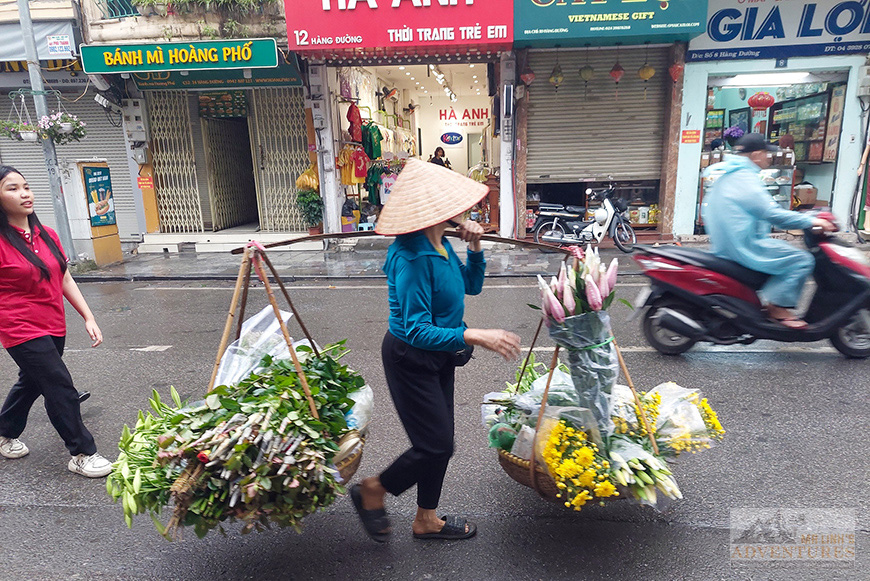 Those everyday moments that hold a magic we carry with us for a long time | Mr Linh's Adventures
Other memories without passports or forms
There’s also that phrase in the local dialect that you misunderstood but pronounced with ridiculous, unwarranted flair. Laughing. You’ll never say it correctly, but you’ll hold onto it, treasuring it like a password whose purpose you’ve forgotten but whose rhythm you still remember.
There’s maybe that street melody. The real sound of the scooter, with its exhaust pipe holding a specific, repetitive note that blends with the tofu vendor’s cry. You sometimes find yourself humming it when you open the fridge, without knowing why. But it’s there.
There’s this mental image of a market at dawn, where you deliberately got lost, without a phone, leaving it up to the chaos to organize your morning. You came out with fruits whose names you don’t know and the sudden certainty that you could live here, if you were a different version of yourself.
All of it fits on the plane. Nothing weighs you down. It all belongs to you now, and no one can dispute it.
The ultimate souvenir
Because, deep down, the only memory that no one can take away from you or declare non-compliant with your country’s phytosanitary standards is the transformation. Your own.
The moment you understood that the horn isn't aggression but conversation. When you ate something that revealed your usual "Asian cuisine" as the joke it was. When you failed to order a simple coffee with such magnificence that you and the server reached understanding beyond language, that of shared humanity facing absurdity.
It doesn't fit in a suitcase. It isn't declared on any form. You don't really display it. Or rather you do, but in filigree: in how you cross a street, react to a smell, push open a small Vietnamese restaurant door suspecting it won't be quite the same, and entering anyway.
Customs can do nothing against this. It is, in some way, your ultimate revenge.
And if you really want a physical object, remember: in most countries, industrially packaged biscuits always pass. Buy sesame rice crackers, ginger candy. Eat them before friends with a mystical expression. Tell their story.
Sometimes the perfect souvenir is simply a biscuit that tastes of elsewhere. And elsewhere, in this case, a slight smell of nuoc-mâm. Exactly as it should be.
If you’re looking for “Made in elsewhere” magnets and marked-out tourist routes, you’re in the wrong place. But if you want Grandma’s phở recipe and the faces that time can’t erase, you know where to click. Leave the trinkets to the tourists. Travel with Mr. Linh’s Adventures.