Your Boarding Pass
| Departure |
Destination |
Conditions |
Ticket price |
| May–Jun |
South (Saigon, Mekong Delta) |
Short showers, explosive greenery |
-40% |
| September |
Center (Hoi An, Hue) |
Right before the downpours, after the crowds |
-30% |
| Off-season |
North (Hanoi, Ha Long) |
Intense green, dragon-like mist |
-50% |
Flights to skip: July–August North (typhoons) | October Center (floods)
Three questions before you board…
- Hate humidity? Stick to dry season. We won’t judge.
- Prefer lush green over scorched skies? Board now.
- Tight budget? The monsoon hands you luxury at budget prices.
Immediate boarding for those who want the panoramic view...
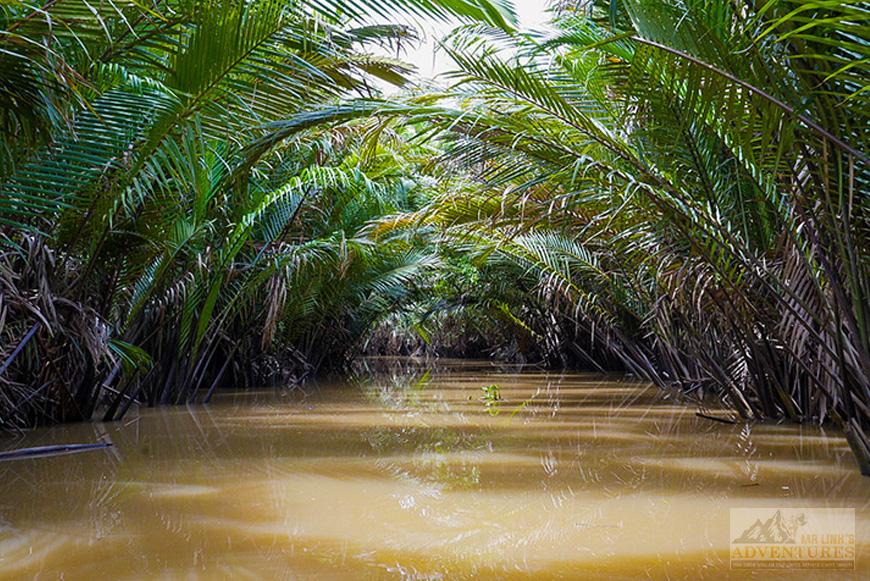 After the rains, the Mekong Delta becomes lush | Mr Linh's Adventures
When does it actually rain? (Spoiler: Not the same way everywhere)
Three regions, three monsoons, zero logic. Vietnam is 1,600 km of weather that clearly skipped the same briefing; three microclimates politely ignoring each other, and a monsoon that shows up uninvited like a capricious great-aunt. You book a week and, within 48 hours, you’ll cycle through three distinct seasons like acts in a meteorological cabaret.
North (Hanoi, Sapa, Ha Long)
The North acts like a three-volume novel.
November–April: dry season.
May–October: wet season (the southwest monsoon), with July–August peaks heavy enough to anchor junks to the dock like readers glued to a final page.
January in Hanoi? You’ll shiver at 15°C. May? You’ll bake at 35°C. The only place on Earth where you can catch a cold and heatstroke on the same weekend. Rain falls in sheets, mountains melt into mist, and rice paddies turn into flawless mirrors.
Center (Hue, Hoi An, Da Nang)
Here, the weather has a deeply questionable sense of timing. The rainy season plays the latecomer, arriving September–January and peaking in October–November, when Hoi An decides it’s Venice 2.0. Flooded streets, makeshift boats. Sometimes the production includes typhons and serious flooding. But March–August? Pure sun festival: beaches, clear skies, and east winds determined to parch everything in their path.
South (Saigon, Mekong Delta)
The South runs a well-oiled tropical routine from May to October, with one twist: the rain doesn’t fall. It crashes down. Short, violent bursts (20–40 minutes), usually in the afternoon, followed by a sun that reappears without even asking permission. Mornings and evenings are yours to enjoy. Temperature stays steady at 25–35°C year-round. Dry from November to April.
That’s the weather briefing. Now, the real reason you’re here.
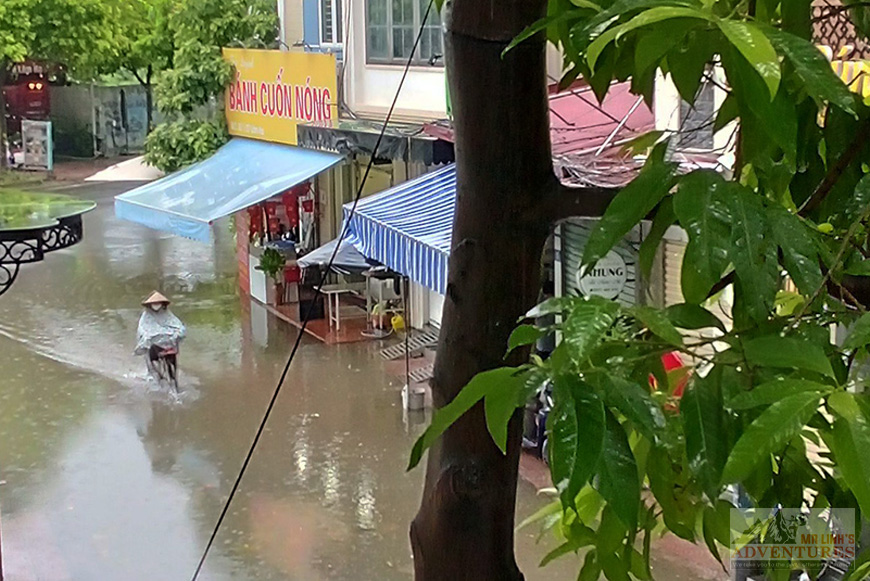 Hanoi may be a victim of violent typhoons | Mr Linh's Adventures
6 Reasons to pick the monsoon (Against all odds)
Fine, don’t visit Vietnam in the rainy season. Unless you want…
Landscapes in “Avatar on sale” mode
When the monsoon passes, Vietnam stops being polite and becomes spectacular. Neon green melts into liquid emerald. The rain washes away the dust, and the rice terraces of
Mù Cang Chai or the hills of
Da Lat look like they’ve just stepped out of a tailor’s fitting room; like a film costumer dipped their brush in pure moisture and repainted the planet. The North’s paddies become emerald mosaics, the Mekong Delta swells, vegetation explodes. It’s the difference between a Windows XP desktop background and a Monet. You see it.
Zero tourists
The monsoon is nature’s filter. It’s Vietnam without the queue. The “normal” folks stay home. You get to wander
Hoi An without playing Tetris with 400 groups in matching shorts and North Face bags. Low season is when the lanterns light up just for you, when tailors actually have 24 hours to stitch your shirt, and when you cross the Japanese Bridge without dodging a drone.
In the North, Sapa’s terraces are yours alone. You might slip a little. Worth it.
Strategic downpours
The real Vietnamese brunch? Happens under a tarp. Picture this: under a makeshift awning, a cà phê sữa đá still cold, a bánh mì wrapped in newspaper, rain drumming on corrugated metal, and that rare silence where the city finally exhales. It’s street-side coffee, upgraded to main-stage theater.
In the South, rain usually hits between 2–5 PM. Sightseeing in the morning, siesta in the afternoon, out by evening. It’s practically a schedule dictated by nature. And those quick bursts drop the temperature by 5–6°C instantly. Dry season? An oven. Rainy season? Vietnam’s built-in AC.
Rain doesn’t ruin things here: it reveals them
Temple tiles gleam like they just received a medal; floating markets on the
Mekong turn into melancholic film sets, every sampan playing its own solo; and in Saigon, even traffic jams take on the grace of an aquatic ballet, scooters weaving through puddles with an elegance Paris will never know.
Indoor activities that actually deliver
Hanoi’s museums, Hoi An’s cooking classes, lantern workshops, water puppet theater. The rain forces you to slow down and turns every awning into an unlikely meeting spot. You share a trà đá (or a beer, I don’t judge) listening to the drops fall. Intimate moments the sun never offers.
Prices that make your wallet weep (tears of joy)
Flights, hotels, tours: everything drops 30–50% in low season. You can haggle for a Ha Long Bay junk like it’s a night market stall. The wallet smiles. The socks, however, cry.
And let’s be honest: some chase the sun. Others learn to negotiate with the rain. Plastic sandals that have seen worse, quick-dry shirts, a discreet dry bag, and that half-smile that says: “Yeah, I’m getting soaked. And no, I don’t care.”
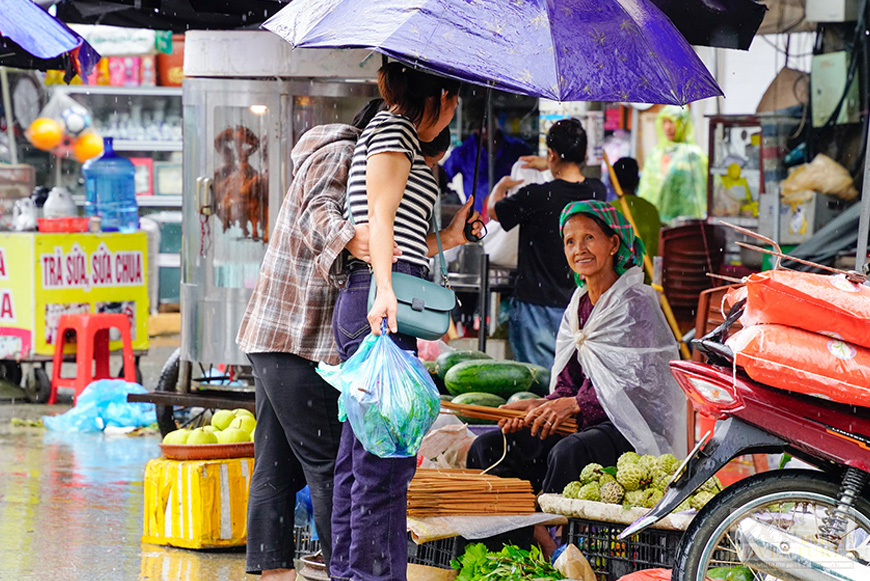 Despite the rain, life goes on on the local markets | Mr Linh's Adventures
The rules of the game (because we’re adventurers, not reckless)
No, that $2 transparent umbrella is not your friend. Vietnamese wind will flip it inside out before you finish your sentence.
Yes, Central Vietnam’s typhons demand respect. Check forecasts, avoid the coast during alerts, and know that locals handle it better than anyone: buckets out, chairs on tables, life goes on.
But 90% of the time, the “rainy season” is just marketing speak for “the season when everything breathes.” Prices drop, locals smile more, the pace slows, and you remember why you travel: not to tick boxes, but to let yourself be surprised.
When to actually say no to the rainy season
July–August in the North: Typhons playing uninvited, Ha Long Bay on forced rest, mountain roads turning into mud slides. Adventure, existential-regret edition.
October in the Center: Hoi An underwater looks photogenic for an hour. After that, it’s just a logistical nightmare. Floods can paralyze transport for days.
Mid-August to mid-September in the Delta: Things get serious here. Major flooding, some villages cut off.
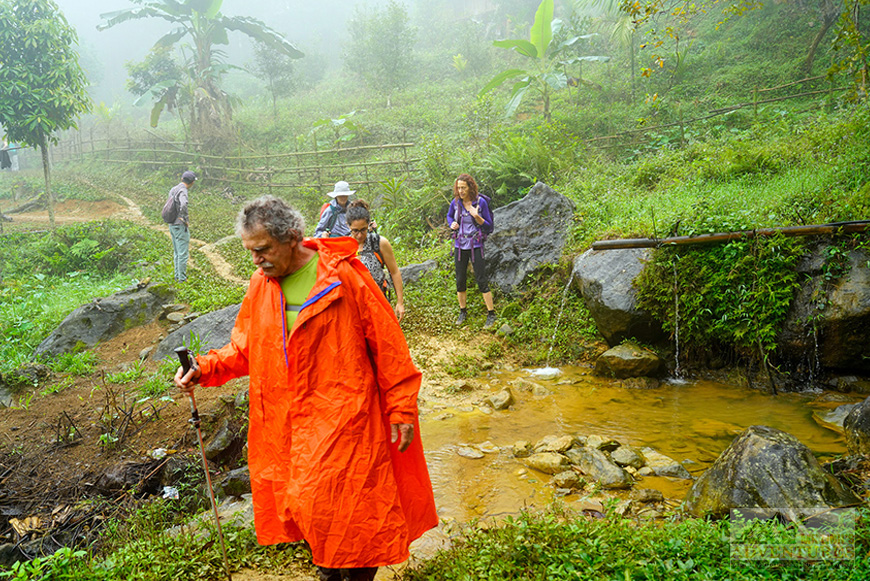 Slippery but memorable ! | Mr Linh's Adventures
So, will you go? Maybe not
Vietnam’s rainy season is meteorological free jazz: some get swept up in the improvisation, others find it unlistenable.
But if you leave with shoes that can handle the road (and the puddles), a poncho that doesn’t look like a trash bag, and the mindset of a National Geographic photographer (the kind who waits three hours under a waterfall for the right light), you’ll bring back memories January tourists will never have.
Don’t pack a neon raincoat. Pack curiosity, a microfiber towel, a book you’ll never open, and the quiet elegance of someone who accepts that Vietnam’s best moments aren’t lived under postcard sun, but in the smell of wet earth, the drumbeat on tin roofs, and that golden light that follows every storm. Like a reward for the bold enough to ruin their loafers.
My personal take? Head South in May–June (rain’s still tame, greenery’s maxed out), or hit the Center in September (right before the heavy rains, long after the crowds).
And if you really want to stress-test your sanity? August in Hanoi. You’ll leave changed. Or soaked. Usually both.