Did you know? Floating in the hushed, carpeted corridors of tourism marketing is a formidable institution: The Eco-Guilt Industrial Complex.
It’s that little voice whispering at the moment of booking that your carbon footprint is probably the size of a small moon, that your arrival will awaken all the mountain spirits, and that to earn the coveted title of Authentic Traveler™, you must traverse Vietnam on a bamboo raft while chanting mantras and weaving your own backpack from lotus fibers. Ridiculous? Yes. Demanding? Absolutely. Practical? Never.
Let’s be cynical for a moment: you are human, slightly selfish, and that is perfectly acceptable. The good news (and this is where the universe displays a stubbornly reliable optimism) is that you don’t need to be a saint to have a positive impact. You just need to stop trying to be one, and simply become a polite guest.
This is precisely what makes the Mr Linh’s Adventures model in Northern Vietnam work. Not through ostentatious virtue, but through a mechanics of practical humility and local attention.
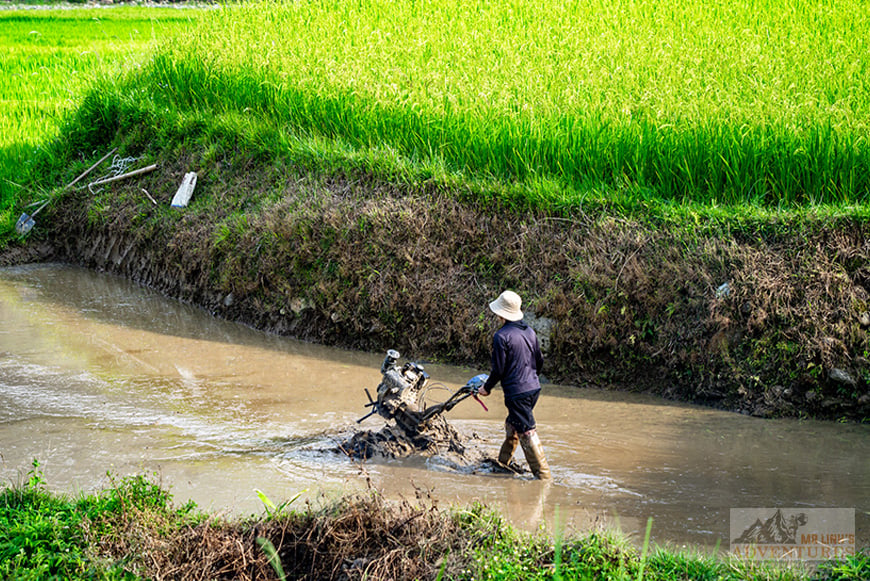 We can not travel like a clean ghost without consequences |Mr Linh's Adventures
The myth of "zero impact" (and the far less pretentious art of "good impact")
The tourism industry sells the idea that you can travel like a clean ghost: silently, without a trace, without consequences. Hilarious, isn’t it? The moment you breathe in an air-conditioned international hotel, you’re having an impact: you’re siphoning money out of the country and sending it back to shareholders who don’t even know where Vietnam is on a map.
Community-based tourism, on the other hand, assumes the impact. But it’s an impact you can see. Choosing a homestay with a Tay family in Ba Be or Hmong hosts in the heights of Ha Giang isn’t poetic philanthropy; it’s economic direct-to-consumer. Your money doesn't vanish into a financial nebula; it lands on the kitchen table, acquires a name, a voice, and occasionally, a dog.
Do they welcome you out of pure cosmic altruism? No. They welcome you because your presence allows them to buy that new roof, pay for the kids' school, or purchase that specific chicken they will prepare with a care and pride no Michelin-starred chef in Paris could ever match. It’s a transaction. Yes. But an honest one. Where everyone leaves satisfied, and where sustainable development looks less like a moralizing doctrine and more like a market that actually works.
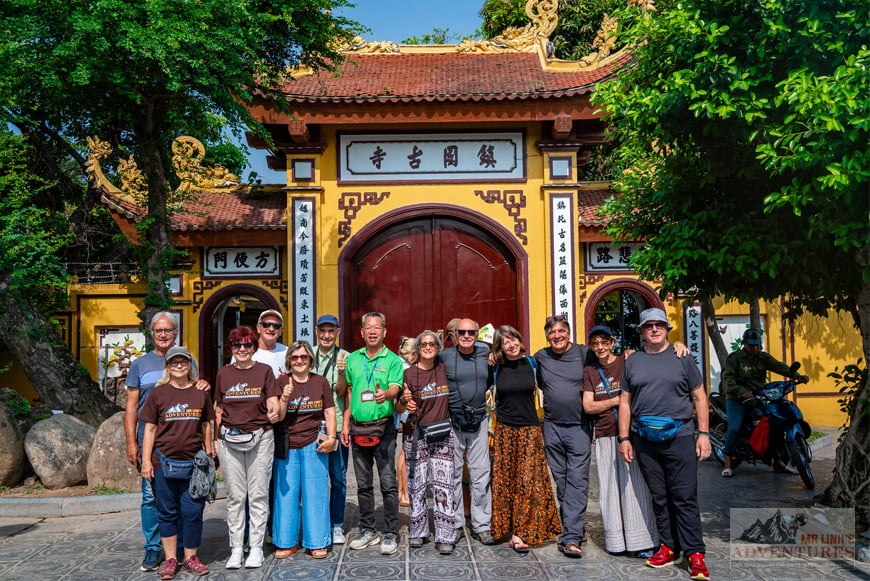 Our guides are discreet friends with a thousand and one tips | Mr Linh's Adventures
Your guide is not a GPS (he’s a neighbor)
In the classic industry, the guide is a polite accessory. They hold a flag, recite historical dates you’ll forget before the next bend, and ensure you don’t touch anything.
At Mr Linh’s Adventures, the guide is not a function; they are a neighbor. From Cao Bang to the forgotten folds of Sapa, you aren't dealing with an actor in uniform, but someone who knows the region like they know their own street: the shortcuts, the gossip, the best soup at 3 AM, and the great-aunt who distills a rượu ngô (corn alcohol) capable of erasing marital conflicts for a few hours.
And guess what? Neighbors don’t need to push you toward "Official Viewpoint No. 4", crowded with buses and photographers on their coffee break. They slip you off the beaten path, onto a trail that smells of damp earth, where the mist rises on a schedule known only to the mountain, leaving you momentarily incapable of any thought other than "wow". By choosing them, you aren't paying for a moral lesson; you are buying clandestine access to the best-protected address book in the country.
How to avoid being a "walking wallet"
Tourism has this unfortunate tendency to turn local cultures into adult theme parks. No, people in traditional attire are not extras paid to brighten up your Instagram stories. They are humans who have smartphones, watch cheesy South Korean dramas, and sometimes find tourists in fluorescent shorts slightly bizarre. And they aren't wrong.
The key to a trip that doesn’t feel like a sentimental mugging: stop treating these people like rare specimens and start treating them as equals.
- Ask before photographing. A smile + a gesture = everyone wins.
- Buy local, buy direct. Weaving bought at the source feeds a family; the airport souvenir feeds a distant warehouse.
- Learn two words: "Xin chào" (Hello) and "Cảm ơn" (Thank you). Practical, short, effective.
And that’s it. No need to become a Zen monk: a soupçon of elementary politeness is enough. In return, you will leave with authentic human warmth. Something no all-you-can-eat buffet or hotel hammam can ever provide.
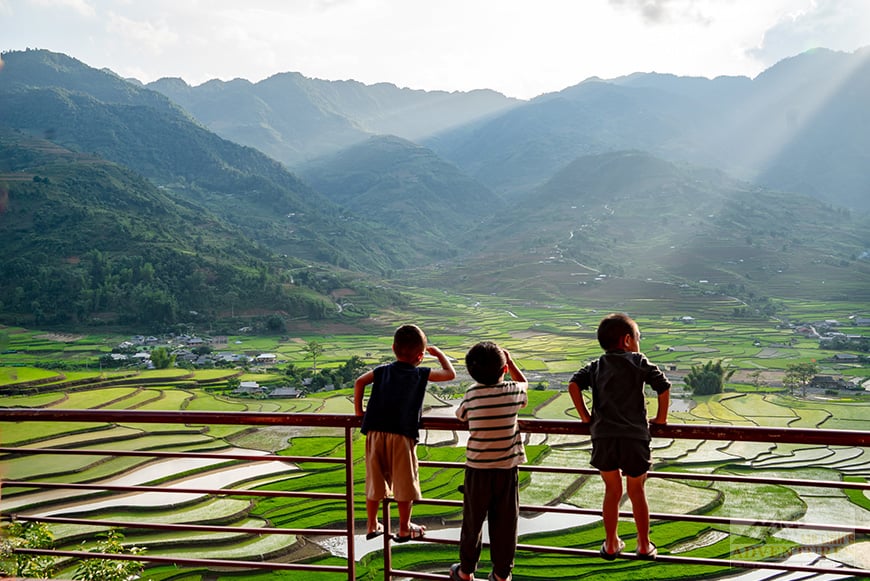 We are from here, from the land of the dragon | Mr Linh's Adventures
Mr Linh’s Adventures: we are from here
We are not one of those corporations that discovered "responsible travel" while flipping through a public relations manual. No: we are from here. The villages we take you to are the ones where we used to chase chickens. Where we grew up.
We limit our group sizes not because it’s "trendy", but because 20 people in a small village is an invasion, and we hate invasions. We train our guides to be proud of their heritage, because a proud guide will give you an experience a hundred times more intense than a guide reciting a memorized text just to make ends meet.
Yes, we know that travelers are essentially two things: lazy and hungry. We have built our itineraries to flatter these two weaknesses (good food and no unnecessary hiking), while ensuring the money stays around the corner, in the pockets of the people who make this country magnificent. It’s pragmatic, discreet, and surprisingly profitable on a human level.
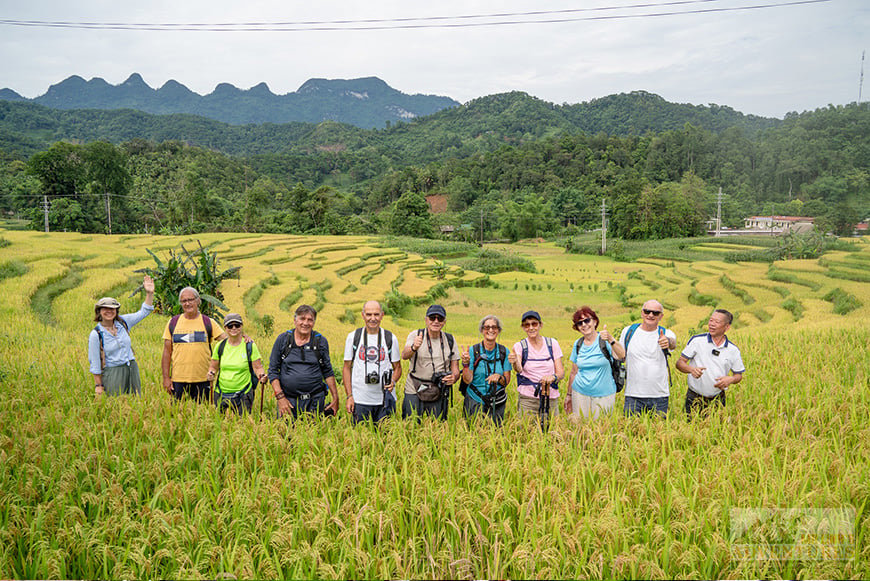 Sustaibnable tourism : a personal choice more than a trend | Mr Linh's Adventures
The moral of the story is that there isn't one
Travel agencies love the term "responsible travel". It sounds good, it reassures shareholders, it fills boxes in CSR reports.
We prefer to call it "the only smart way to not ruin your vacation".
You can call it altruism if you like. But deep down, you and we know the truth: you choose Mr Linh’s Adventure because you want the best food, the most beautiful landscapes without the crowds, and encounters that are actually worth having.
The fact that your money stays in the pockets of the people who make this country magnificent, instead of evaporating into the tax havens of mass tourism? Consider it a happy side effect. A karmic bonus for being smart enough to choose the right path.
So, how do we do this?
You can keep scrolling, looking at photos of happy people in places you won't go, and eating buttered pasta while waiting for your next flight.